Cart
0
You may also like


The safest way to clean most toys is a gentle, fragrance-free cleaner, warm water, a thorough rinse and full drying. Disinfecting is only needed in specific situations, such as illness in the house. Toys go into mouths, so the cleaner you choose matters as much as the cleaning itself. Below we explain how to pick a non-toxic toy cleaner, how to treat each type of toy, and when a stronger step is justified.
A toy cleaner is only as safe as the way it is used, and children put toys in their mouths, which raises the bar. Three things count most: what is in the formula, how well it rinses off, and whether it suits the toy’s material.

The term sounds reassuring, but EWG explains that “non-toxic” has no standard industry definition, so the word alone cannot tell you which product is safest. The American Cleaning Institute adds that safety depends on exposure and on following the label directions, and it points shoppers to the EPA Safer Choice mark as a guide to safer ingredients.
In practice that means two habits. First, read the ingredients rather than the front of the bottle. Our guide to reading cleaning product ingredients walks through what common ingredients do. Second, follow the dilution and rinsing directions every time, even with a gentle formula.
For a cleaner that will touch toys, these are sensible criteria:
We design our formulas around the first two points: they are made without synthetic chemicals, artificial fragrances or alcohols.
Most families do not need to disinfect toys routinely. Cleaning lifts dirt and residue. Disinfecting goes further and is for particular situations.
The Scottish NHS childcare guidance on infection prevention says disinfectants should not be used for routine cleaning, apart from toilets and food preparation areas, and that disinfection may be needed during an outbreak as directed by the health protection team. That guidance is written for childcare settings, but the principle carries over to a home.
Consumer Reports, quoting a paediatrician, says that at home cleaning is enough unless someone with a fever or diarrhoea has touched the toys. The same article lists the moments when sanitizing makes sense:
Soap and water are a fair starting point. The Royal College of Nursing notes that soap and water can clean a toy, though cleaning does not necessarily destroy microorganisms. If you want to understand the difference in more detail, read our explainer on disinfectant versus cleaner.
The right method depends on what the toy is made of. Check the manufacturer’s care instructions first, as they override any general advice.
Smooth, non-porous toys are the easiest. The RCN advises choosing toys that can be cleaned easily and have non-porous surfaces such as plastic.
Wood absorbs water, so keep it brief. Wipe with a cloth wrung out in diluted cleaner, wipe again with a cloth dampened with plain water, then dry straight away. Avoid soaking, which can swell or crack the wood and lift paint or finish.

Do not submerge these. The RCN recommends wiping electronic devices between uses. Use a barely damp microfibre cloth, wipe the surface, avoid the battery compartment and speaker holes, and let the toy air dry. Consumer Reports describes wiping such toys with a damp microfibre cloth rather than washing them.
Soft toys hold dust and are harder to clean, which is why the RCN says fabric toys are discouraged in health settings. At home they are part of childhood, so wash them properly.
For hospital or childcare use the RCN specifies that fabric parts should withstand laundering at 71°C for three minutes or 65°C for 10 minutes and then be thoroughly dried. Most home plush toys will not tolerate that, so follow the care label.
Anything a baby chews deserves an extra rinse. Wash with a very dilute solution, rinse under running water until no suds remain, and dry fully. Skip scented products here altogether.
Many households keep white vinegar and bicarbonate of soda in the cupboard, and some guidance does include them. A UK eczema health pack from an NHS trust suggests “old-fashioned” agents such as white vinegar and bicarbonate of soda for people with eczema, and notes that chemicals in household cleaners can irritate skin. Consumer Reports mentions a vinegar solution on a cloth for toys with electrical parts.
If you go that route, keep a few points in mind:
A ready-made, properly diluted cleaner removes the guesswork about ratios, which is where homemade mixes most often go wrong.
A routine is easier to keep than a deep clean you keep postponing.
| How often | What to do | Which toys |
|---|---|---|
| Daily | Wipe up spills and sticky hands | Toys used at meals, high chair toys, play mat |
| Weekly | Wash with mild cleaner, rinse, dry | Mouthed toys, bath toys, favourite soft toy |
| Fortnightly or monthly | Wash or wipe the whole toy box, check for damage | Hard plastic, wooden and electronic toys |
| After illness or shared play | Clean, then use a suitable sanitizer where the product directions allow | Anything touched by a poorly child or visiting children |
The weekly figure echoes Consumer Reports, which describes once a week as reasonable while noting there is no evidence it is necessary. Treat it as a comfortable habit, not a rule. If you are building a recurring cleaning routine for the whole home, add the toy box to the same schedule so it gets attention alongside the surfaces children touch.
Two storage habits help as well. The Scottish NHS guidance says reusable equipment should be stored separately when not in use, and toys should be well maintained. At home, that means keeping clean, dry toys away from the dirty pile and checking items for cracks and wear.
Some toys cannot be rescued. The RCN states that grossly contaminated toys that cannot be effectively cleaned must be thrown away, such as those covered in vomit or saliva. A toy that stays damp inside, smells after washing or has mould is in the same category.
If a child develops a rash, breathing difficulty or symptoms after contact with any cleaning product, speak to your GP, pharmacist or NHS 111, and call 999 in an emergency.
We started Kinetic Clean from a simple idea: if we would not put harsh chemicals on our skin, we should not use them to clean the spaces our families live in. Toys are where that idea matters most, because they are handled, chewed and carried from room to room.
Our approach is to keep cleaning simple. A gentle, natural, non-toxic formula, free from synthetic chemicals, artificial fragrances and alcohols, used at the right dilution, with a good rinse and proper drying. We think that suits families and health-sensitive households better than a cupboard of specialist sprays.
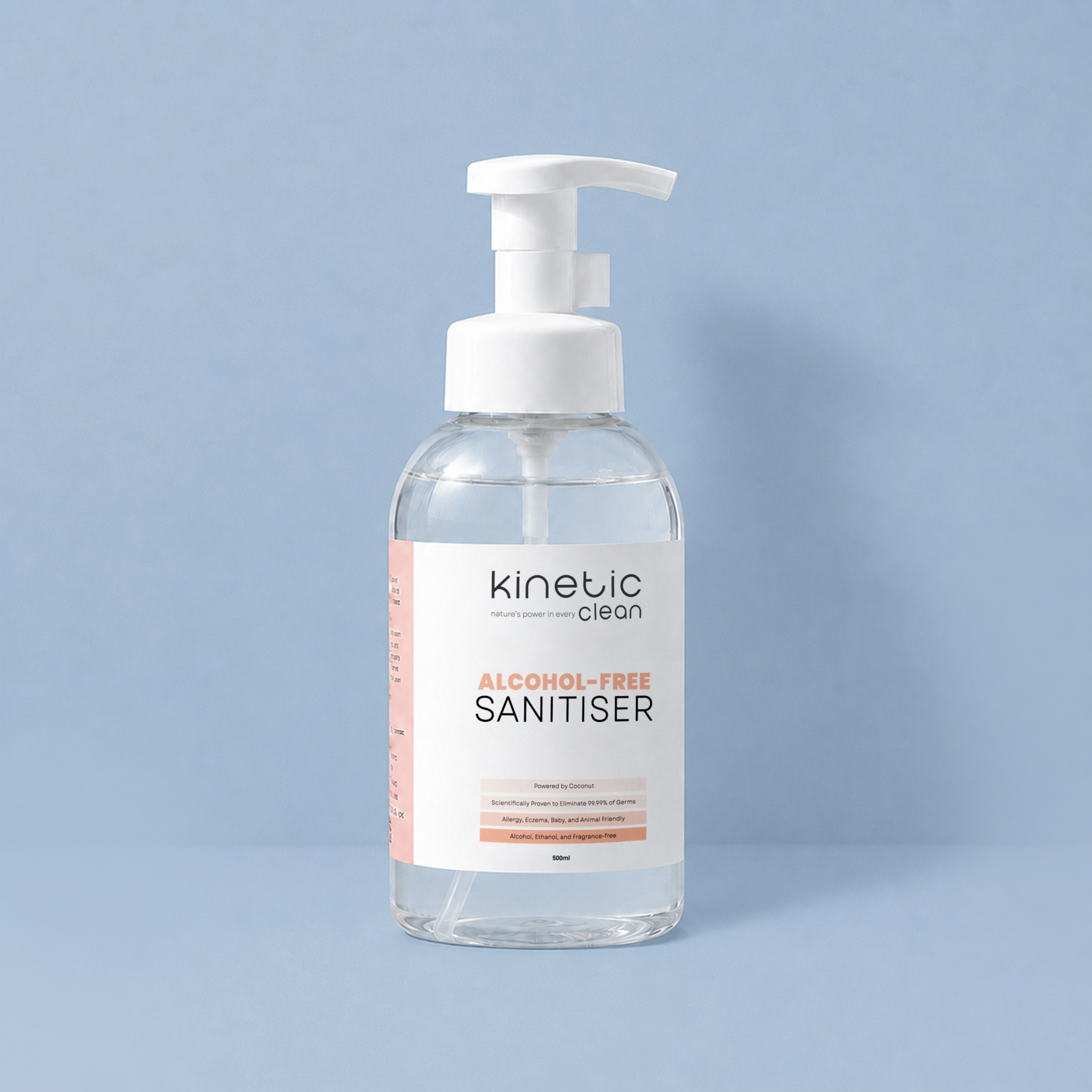
That is why we make a concentrate. One bottle, diluted as directed, can serve the kitchen, the high chair and the play area, and we like that it takes fewer products and less packaging to do so. Our sanitiser is there for the moments that call for it, such as illness in the house, while everyday cleaning stays gentle.
TekHive
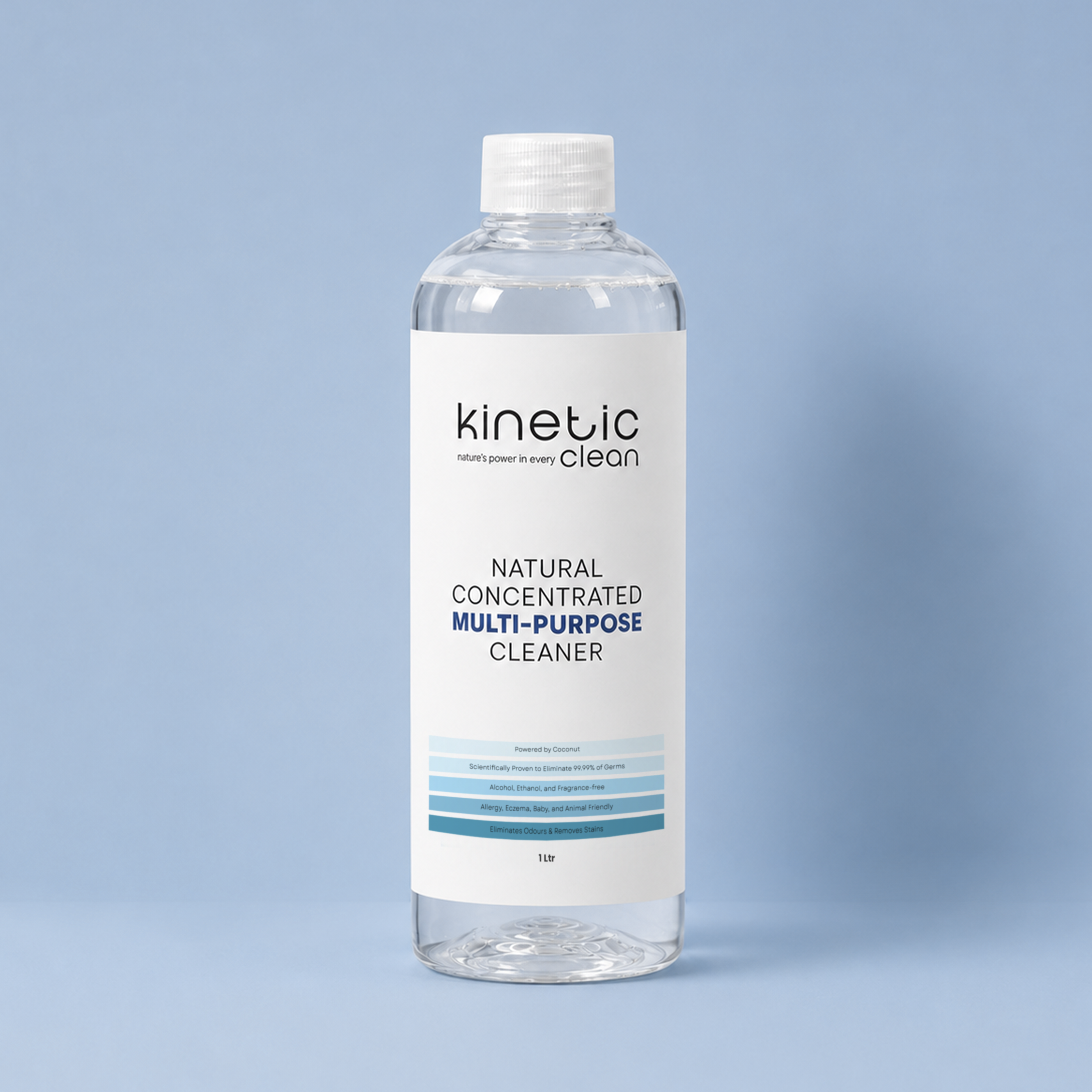
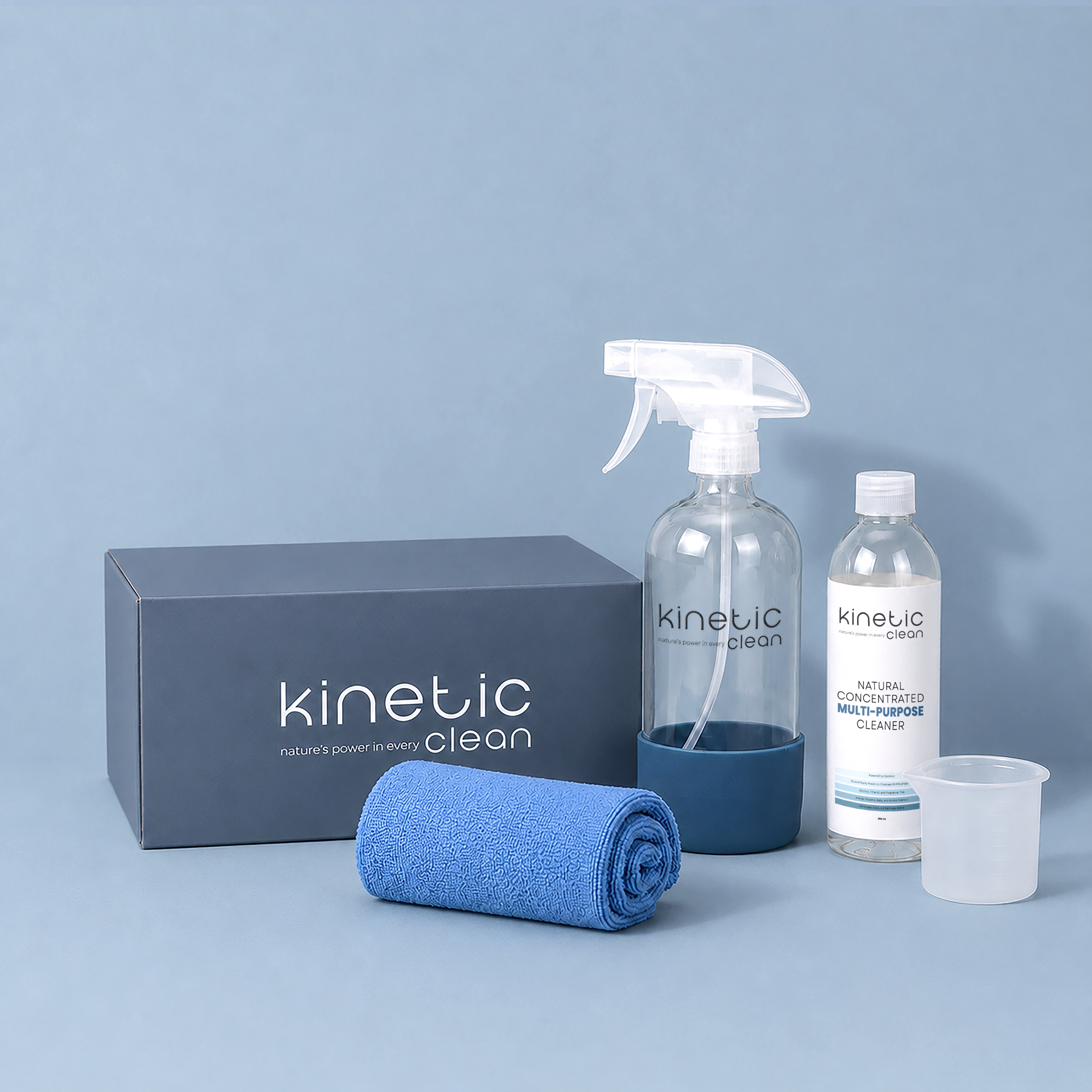
If you want one cleaner for toys and the surfaces around them, our 1L Concentrate Formula is a natural, non-toxic multi-purpose option made without synthetic chemicals, artificial fragrances or alcohols. It is diluted for use, so one bottle goes a long way.

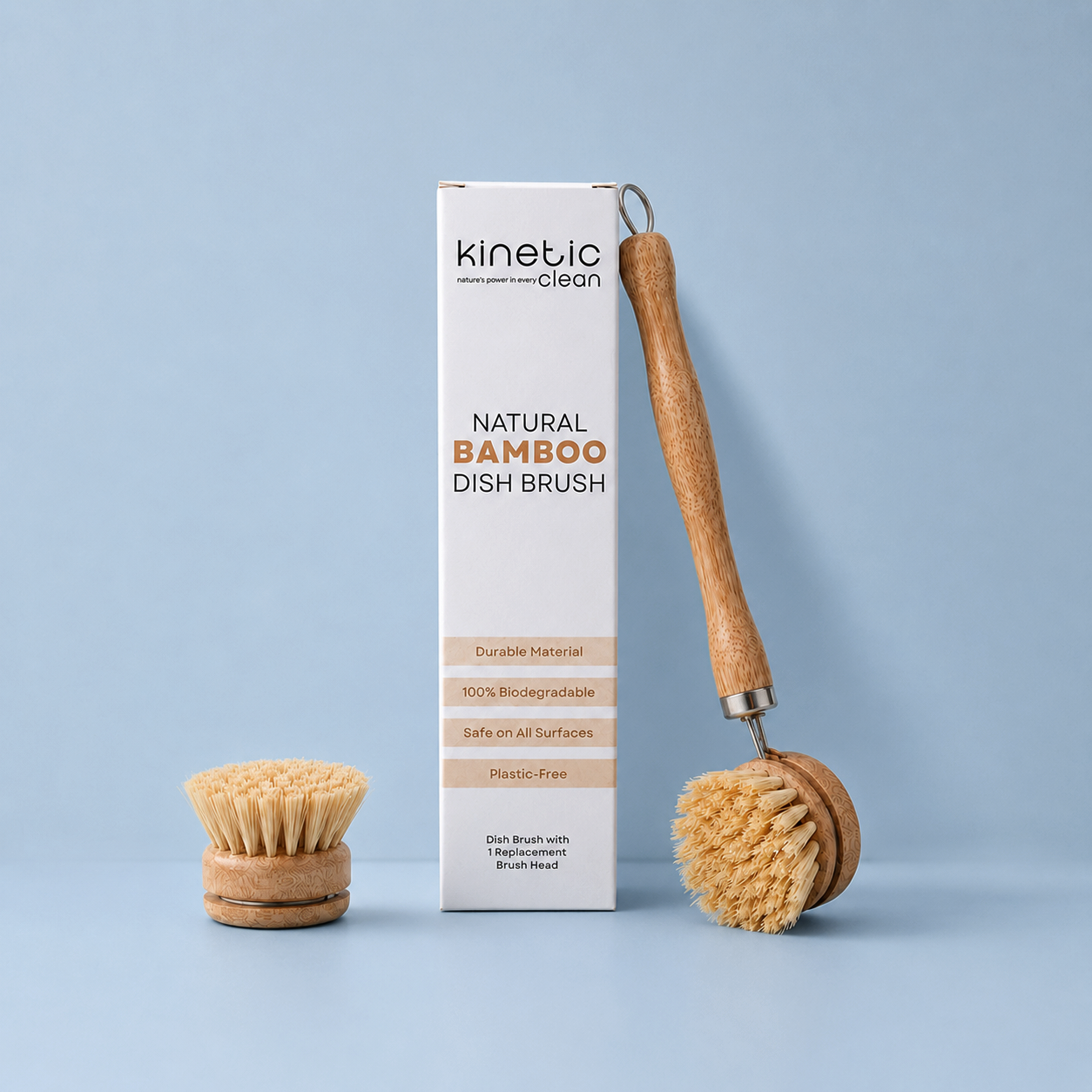
New to Kinetic Clean? The Starter Bundle is a simple way to begin. Our Bamboo Dish Brush, available from £2.99, helps with scrubbing the corners of hard toys, and you can browse everything on our full product page. For more on our approach to safer homes, see our guide to non-toxic cleaning products.
Clean first, because dirt reduces how well any sanitizer works. Wash with mild cleaner, rinse, then use a sanitizer suited to the toy’s material only where it is needed, following the product’s contact time and rinsing directions. Let the toy dry fully before it goes back to your baby.
Soap and water clean toys well, but the RCN notes that cleaning does not necessarily destroy microorganisms. For everyday use that is usually enough. After illness in the house, use a product designed for disinfecting and follow its directions.
Safety depends on the formula, the dilution and the rinse. Choose fragrance-free products, use them as directed, rinse off every trace and dry the toy. Keep the cleaner itself out of children’s reach.
Wipe toys used at mealtimes daily, and wash mouthed toys, bath toys and a favourite soft toy about once a week. Clean other toys every few weeks, and sooner after illness or when they have been on the floor or outside.