Cart
0
You may also like
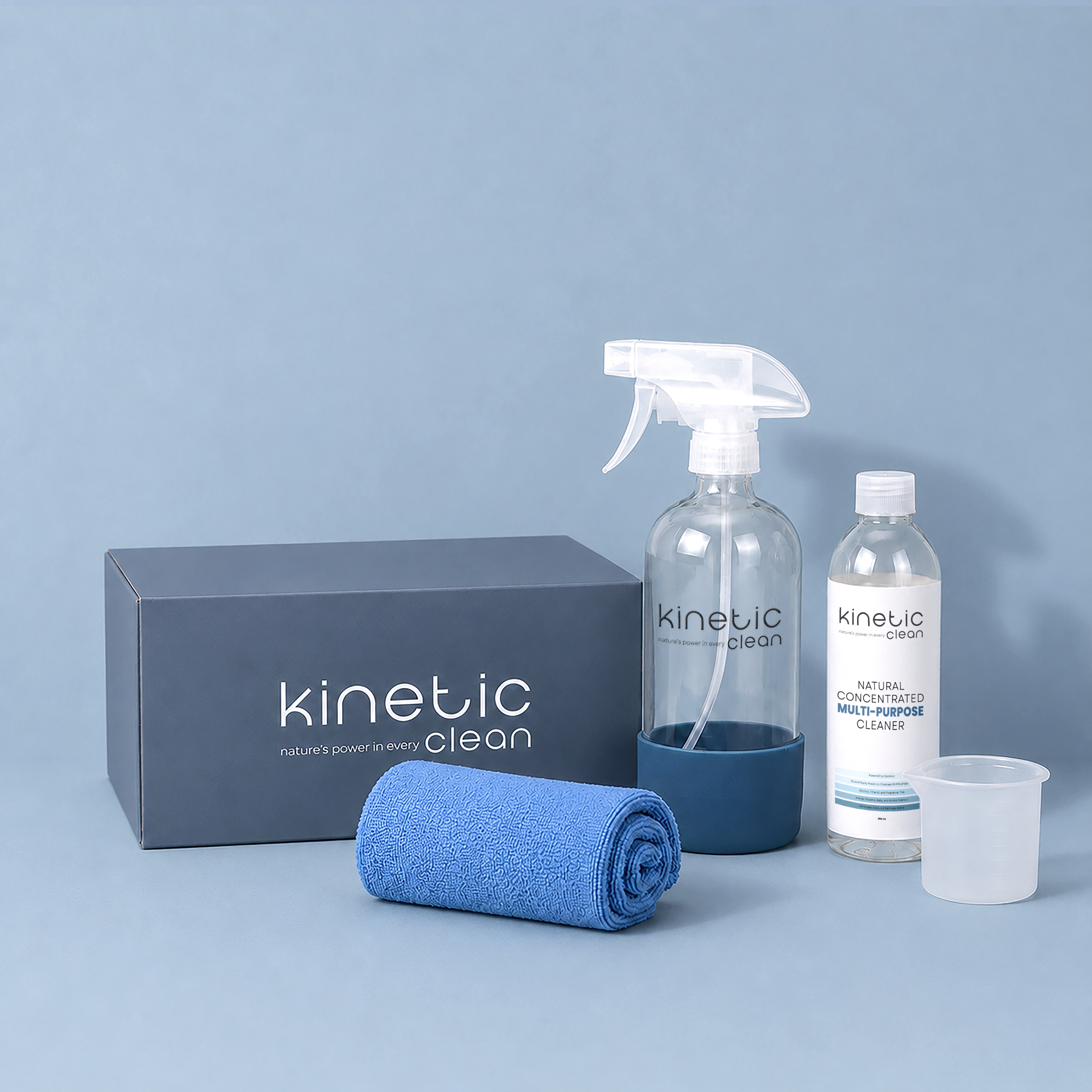


Chlorine-free cleaning products are products that do not contain chlorine bleach (sodium hypochlorite). The simplest way to get a home that is clean without chlorine fumes is to move your everyday cleaning to a natural, non-toxic range that was never built around harsh chemicals. Kinetic Clean makes household cleaners free from synthetic chemicals, artificial fragrances and alcohols, so one concentrate and one sanitiser can cover most of what a family cleans each week. This guide explains what the label term means, what to check before you buy, and how to cover every room.
Chlorine in household cleaning almost always means bleach. Household bleach is a solution of sodium hypochlorite, and it is the ingredient that gives many toilet cleaners, mould sprays and “thick” disinfectants their sharp smell.
A product labelled chlorine-free does not contain that ingredient. According to a label-decoding guide from the Environmental Working Group, chlorine-free products may contain oxygen bleach instead. Both kinds are irritating or corrosive, but chlorine bleach can release traces of chlorine gas, and frequent users face a higher risk of asthma and other respiratory problems.
Oxygen bleach, sometimes sold as “non-chlorine bleach”, is mostly a laundry product. The American Cleaning Institute describes it as containing peroxygen compounds such as sodium percarbonate or hydrogen peroxide that release active oxygen in the wash. The result is a gentler bleaching action that is safe on most fabrics.
So the label tells you one thing: chlorine bleach is absent. It does not tell you whether the product contains synthetic fragrance, alcohol or other ingredients that irritate skin and lungs. That is why a chlorine-free claim is a starting point, not a full safety check.

The main concern is what happens when products meet. GOV.UK guidance on sodium hypochlorite states that mixing bleach with acidic products, vinegar included, produces chlorine gas, and that mixing it with ammonia-containing cleaners can produce highly irritating chloramines. The same page notes that household bleach at 6% or less is a mild to moderate irritant, and that a small proportion of people exposed to chlorine gas may develop long-term breathing problems.
A bathroom is a small, poorly ventilated room, and it is the place where people most often combine a toilet cleaner, a limescale spray and a bleach product. A range with no chlorine bleach in it removes that particular risk at the source.
If products have been mixed by accident, the advice is simple. Move away from the source and get fresh air. Seek medical advice if you have inhaled or swallowed bleach, and call 999 if someone is struggling to breathe. For a closer look at risky pairings, see our guide to which cleaning product combinations are dangerous and the page on ammonia cleaning risks.
Sensitive households have a second reason to look further. If someone in the home has asthma, eczema, or skin that reacts easily, or if you are pregnant, ingredients such as synthetic fragrance and alcohol matter as much as chlorine. Our page on cleaning products during pregnancy covers what to use and avoid.
A label is the only place where you can check a claim. These are the points worth your time, in order.
The Independent’s 2026 review of natural cleaning products, quoting expert Dr Sarah Turns, advises avoiding any cleaning product with a hazard warning on the back: words such as caution or danger, or a note about aquatic life or inhalation. It is a fast filter that takes seconds in a shop aisle.
If it appears, the product is a chlorine bleach product whatever the front of the bottle says. Words such as “thick”, “germ-kill” or “stain remover” are not clues, so go to the list.
The same Independent review notes that “natural” is not legally protected for cleaning products in the UK. A brand can use the word freely, which is why ingredient lists and certifications carry more weight than front-of-pack wording. Our guide to reading cleaning product ingredients explains what each common ingredient does.
The Independent review also advises preferring fragrance-free products, because synthetic fragrances can contain many chemicals that are not individually listed. Kinetic Clean products are made without artificial fragrances. Alcohol is the other ingredient that hides in sprays and wipes, and our page on alcohol in cleaning products shows where to find it.
The EU Ecolabel is one third-party mark you may see in UK shops. Its detergents user manual requires all surfactants to be readily aerobically degradable, caps non-biodegradable organic content, and sets limits for toxicity to aquatic life. A certification like this is checked by someone other than the brand, which makes it more useful than a front-of-pack word. If you want to learn how to judge any award or badge on a home product, this walkthrough on checking safety award claims shows the questions to ask.
One more point on “biodegradable”: the claim is common and often describes a baseline. We cover it in what the biodegradable label means.
Many first-time cleaners buy a different bottle for every surface and end up with a cupboard full of half-used products. A tested guide from Good Housekeeping UK (the best cleaning products of 2026) lists a basic kit for everyday jobs: washing-up liquid, a multi-purpose surface cleaner, a bathroom and toilet cleaner and a laundry detergent. The same guide warns never to mix cleaning products, bleach in particular.
Here is how that kit translates into a chlorine-free routine, room by room.
| Room or job | What you need | What to avoid |
|---|---|---|
| Kitchen worktops, hob, cupboard fronts | A multi-purpose cleaner and a cloth | Bleach sprays near food preparation |
| Washing up | Washing-up liquid and a brush | Strongly fragranced liquids |
| Bathroom surfaces, taps, tiles | A multi-purpose cleaner, then a sanitiser where needed | Mixing toilet cleaners with anything else |
| Toilet | A toilet cleaner used on its own | Combining bleach with acid cleaners |
| Floors | A diluted multi-purpose cleaner | Ammonia-based floor products |
| Laundry | A detergent, with oxygen bleach only if you need it | Chlorine bleach on mixed loads |
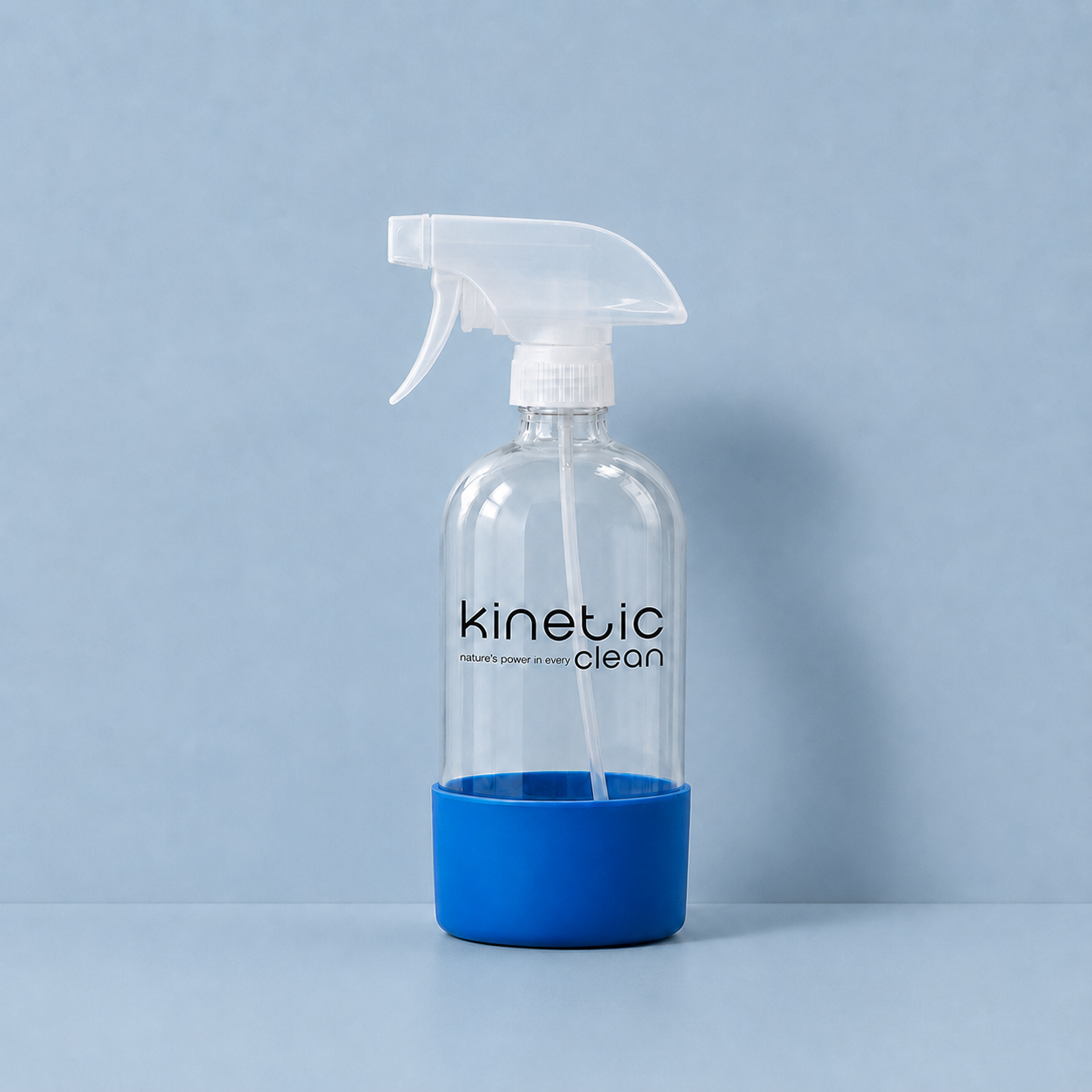
The pattern is that one good concentrate does the work of several sprays. Diluted in a bottle you already own, a concentrate covers worktops, tiles, windowsills and floors. That means fewer bottles, less plastic and fewer chances of two products meeting.
Sanitising works better on a surface that is already clean, because dirt and grease shield germs from the product. Wipe with the multi-purpose cleaner, then use the sanitiser on the places that need it: the kitchen board, door handles, the toilet seat and the tap handles. Kinetic Clean makes both a Multi-Purpose Concentrate and a Sanitiser, designed for this two-step routine.

The bathroom is where people most often reach for bleach, so it deserves its own plan. The three usual problems are soap scum, limescale and mildew, and each has a bleach-free answer.
That Netmums article also carries the key safety point: never combine vinegar or lemon with bleach, because it can release chlorine gas. If you have any bleach product in the bathroom cupboard, keep it away from other cleaners and from your limescale routine.
One note on surfaces. Alkaline cleaners are very good on grease and soap residue but are not right for every material. If you are unsure, our page on the meaning of an alkaline cleaner explains where they suit and where to test a hidden corner first.
Use one product at a time and never mix bleach with anything. None of the dangerous combinations makes a stronger cleaner. They only make a cough, or something worse.
The pairs to know are these:
If you do switch to a new range, rinse out spray bottles before reusing them, and finish up old bleach products by themselves rather than pouring them down the drain after another cleaner. Ventilate the room while you work. If someone develops breathing difficulty, call 999; for advice after a smaller exposure, call NHS 111.
A chlorine-free routine matters most in these homes:
For a broader view of what to look for, our overview of non-toxic cleaning products for a healthier home covers the whole category.
Catherine’s brands began with a plain idea: if we would not put harsh chemicals on our skin, we should not use them to clean the spaces where we eat, sleep and play.
Chlorine is only one part of that. Many conventional cleaners rely on synthetic chemicals, artificial fragrances and alcohols that can irritate skin, lungs and general well-being. So Kinetic Clean is made around natural ingredients, with no harsh or synthetic chemicals, so the whole range works for families and for people who react easily.
That is why we prefer a short, simple cupboard. A Multi-Purpose Concentrate for surfaces, a Sanitiser for the places that need an extra step, and a good brush for the washing up. Fewer products means fewer labels to decode and no risk of the wrong two meeting.
The question to ask of any cleaner is not only “does it contain chlorine?” but “what else is in it, and would I be comfortable using it with my child in the room?” We built Kinetic Clean so the answer is yes.
TekHive
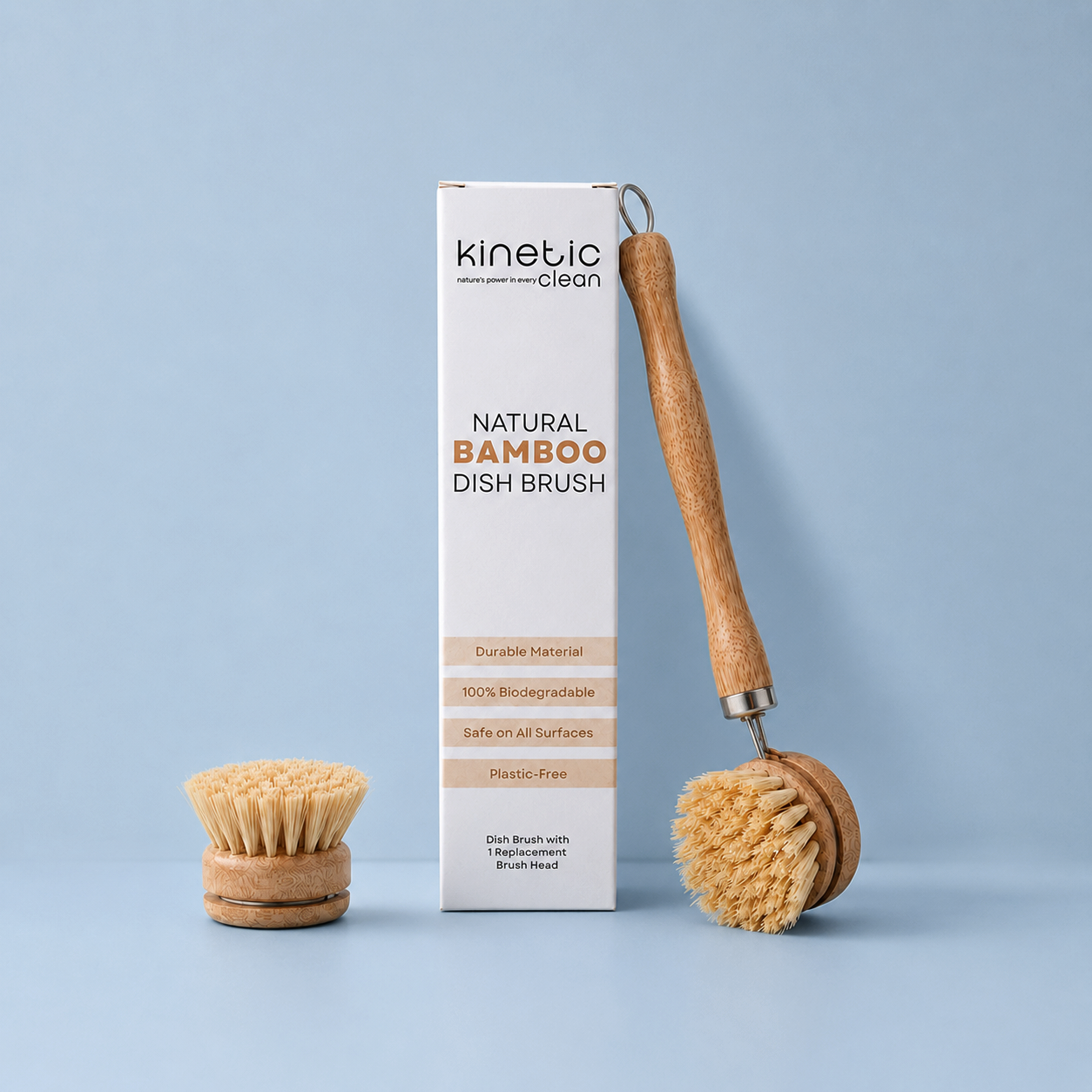
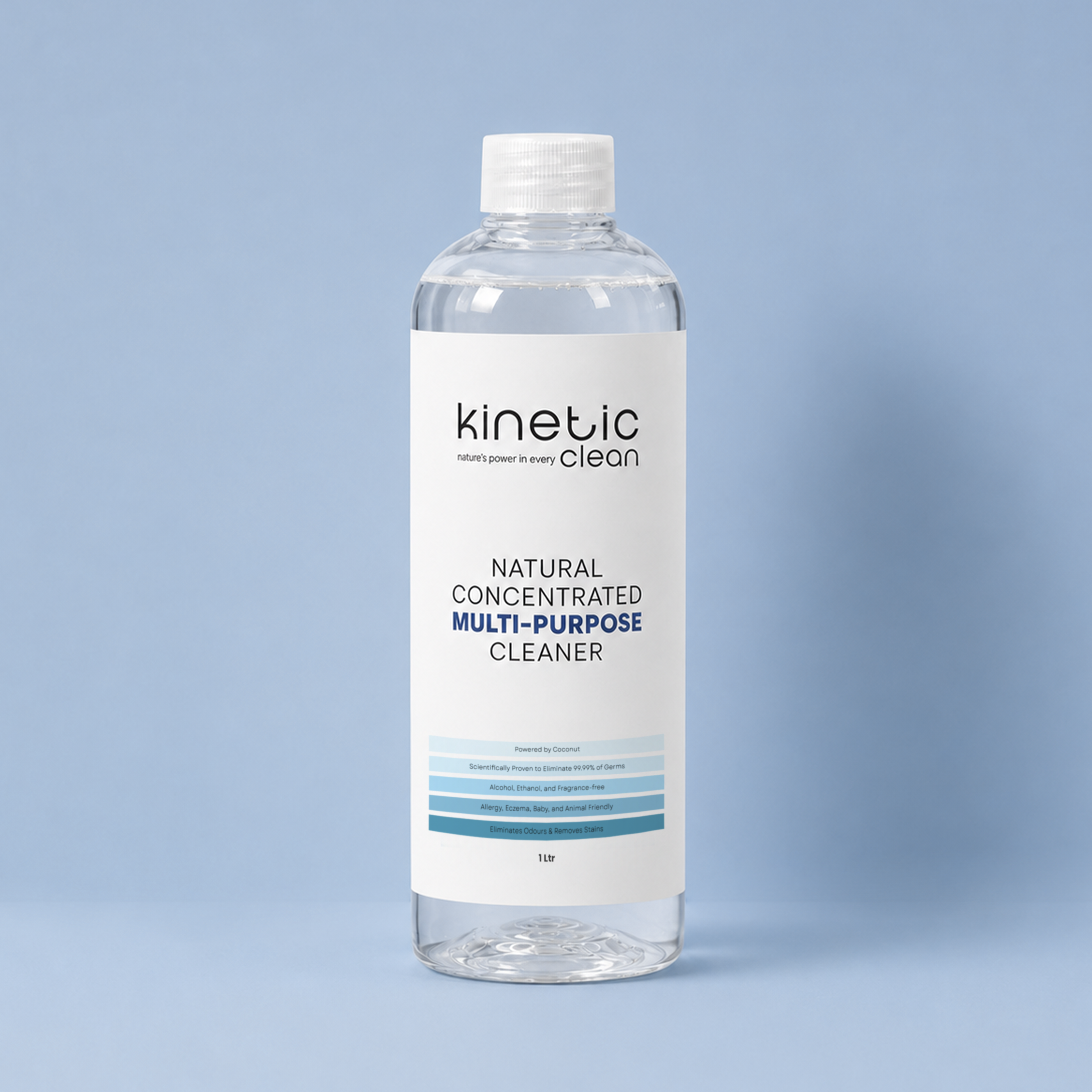
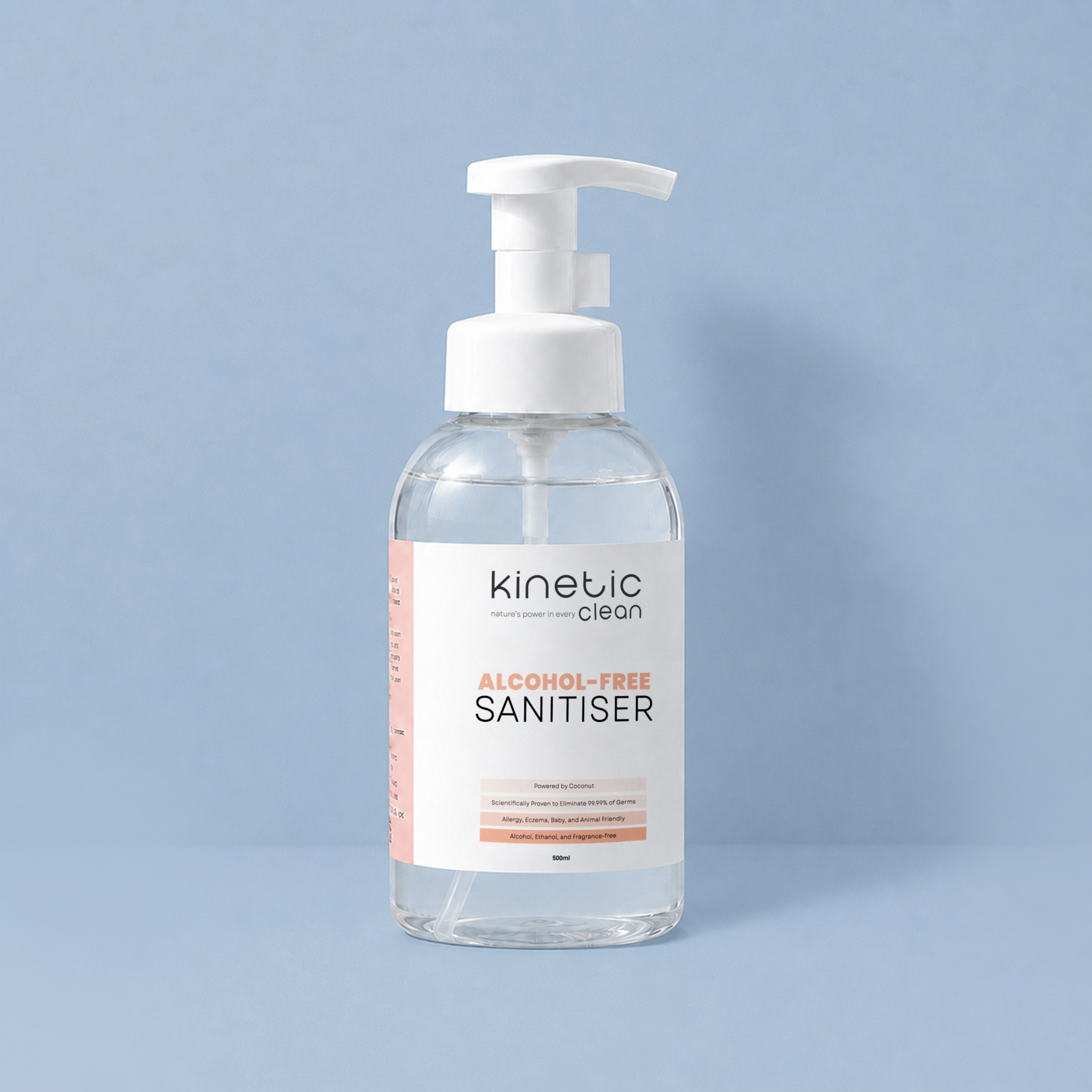
If you want a ready-made chlorine-free routine, begin with the two products that do most of the work. The Multi-Purpose Concentrate is available as a 1L bottle, with a 250ml size for a first try, and the Sanitiser 500ml handles the final step on handles, boards and bathroom surfaces. Both are made without synthetic chemicals, artificial fragrances and alcohols. For the washing up, the Kinetic Clean Bamboo Dish Brush is available from £2.99 on the full collection page.

You can see the whole range on the Kinetic Clean website.
Yes. Chlorine bleach, which is sodium hypochlorite, is found in many toilet cleaners, mould removers and disinfectants. It shows up in the ingredient list under that name. GOV.UK explains that it should never be mixed with acids or ammonia-containing products.
Not by itself. The term only tells you there is no chlorine bleach, and some chlorine-free products contain oxygen bleach or fragrance. For a fuller picture, check the ingredient list, look for hazard warnings and choose products free from synthetic chemicals, artificial fragrances and alcohols.
Start with a gentle multi-purpose cleaner on soap scum, ventilate after every shower to slow mildew, and use an acidic product alone for limescale. Keep each product separate and never combine anything with bleach. Our guides on soap scum and mildew give the full steps.
Leave the room straight away and get fresh air. Do not try to neutralise the mixture with another product. Call NHS 111 for advice if you feel unwell, and call 999 if someone is struggling to breathe.