Cart
0
You may also like


Volatile organic compounds (VOCs) are carbon-based chemicals that turn into gas at room temperature, and many conventional cleaning products release them every time you spray, wipe or mop. The most practical way to lower your exposure is to choose cleaners without synthetic chemicals, artificial fragrances and alcohols, skip aerosols, and ventilate while you clean. That is the approach our formulas are built around at Kinetic Clean, and the sections below explain the evidence behind it.
Public Health England (PHE) defines a VOC by how it behaves in a laboratory test, but in plain terms it is any organic compound that evaporates easily into the air. Its 2019 UK guidance states that VOCs are widely used in household consumer products, including detergents, cleaning products, air fresheners and personal care products, as well as paints, varnishes, waxes and solvents.
In cleaners, VOCs usually arrive in three ways:
The UK cleaning products trade body UKCPI notes that most of the volatile substances released when you use cleaning products and air fresheners are the perfumes. That is useful for a household decision: fragrance is the one ingredient group you can most easily remove from your routine.
The American Lung Association lists the following as products that can release VOCs: aerosol sprays, air fresheners, chlorine bleach, detergents and dishwashing liquid, dry-cleaning chemicals, rug and upholstery cleaners, furniture and floor polish, and oven cleaners.
Asthma + Lung UK gives examples of VOCs found in cleaning products, including acetone, xylene and formaldehyde, and says they can evaporate into the air when a product is used or even while it is stored.
A quick audit of your own cupboard helps. Check for:
If you want a fuller guide to reading what is on the bottle, our article on cleaning product ingredients and how to read labels walks through it.
Fragrance matters beyond the smell itself. Asthma + Lung UK points out that fragranced products such as citrus and pine can react once released into the air to form new chemicals, which is why it suggests unscented products for people whose symptoms are triggered by cleaning smells. The American Lung Association likewise warns that citrus fragrances can react to produce harmful indoor pollutants.
For families this makes a clear, low-effort rule: if a product does not need a scent to do its job, it does not need one in your home. Our guide to fragrance-free cleaning for sensitive skin and homes covers what to look for.
PHE’s 2019 UK guidelines say the health impacts assessed for VOCs include eye and respiratory-tract irritation, allergies and asthma, central nervous system symptoms, liver and kidney damage, and cancer risks. Effects depend on the specific compound, the amount and how long you are exposed. Benzene is the clearest example: the same document notes that the International Agency for Research on Cancer classifies it as carcinogenic to humans (Group 1).
PHE also publishes guideline values for individual compounds. For formaldehyde, the 30-minute guideline is 100 µg/m³ and the long-term (one-year) value is 10 µg/m³. For benzene, it says no safe level of exposure can be recommended. These numbers are mainly for professionals, but they show that regulators treat some VOCs very seriously.

The strongest signals for ordinary households concern breathing. A review from Lawrence Berkeley National Laboratory reports strong associations between cleaning sprays, chlorine bleach and other disinfectants and new-onset asthma. It also cites a study in which frequent use of sprays, particularly glass-cleaning, furniture and air-freshening sprays, was associated with about a 40% increase in wheeze and about a 100% increase in physician-diagnosed asthma.
Asthma + Lung UK reports that about half of studies suggest exposure increases the risk of developing an allergy or asthma, and that using irritating products such as bleach-based sprays can cause respiratory irritation in people with long-term lung disease.

The same charity states that babies and very young children are more affected by chemical emissions than adults. A 2022 systematic review of indoor air pollution and vulnerable groups found that high VOC levels were associated with worsening asthma symptoms. If you are cleaning a nursery, a playroom or a bathroom a toddler uses, this is where gentler products and good airflow count most.
If you are expecting, our guide to cleaning products during pregnancy sets out what to use and what to avoid, and your midwife or GP is the person to ask about your own circumstances.
Yes, they can. The Berkeley review describes research finding that airborne VOCs and ammonia from short bursts of cleaning can remain in the air for extended periods, exposing other people who enter the room soon afterwards. The American Lung Association adds that indoor VOC concentrations can be up to ten times higher than outdoors.
NICE, the body that sets health guidance for England, lists using cleaning products, household sprays or aerosols among the activities that may lead to poor indoor air quality at home. In a modern, well-sealed UK home with the windows shut and the heating on, that matters more than it did in draughtier houses.
UK guidance converges on a short list of habits. None needs special equipment.
Bleach is a common reach for bathroom mould, yet it is one of the products health bodies single out for people with lung conditions. A guide to green cleaning versus bleach sets out when each is appropriate and what precautions to take. For mould specifically, see our guide to removing mildew without bleach.
If you mix your own bathroom cleaner, the safety rule outweighs everything else: never combine bleach with vinegar, ammonia or other cleaners, and do not store mixtures in unlabeled bottles. Homemade products also tend to rely on essential oils, which are fragrance compounds that evaporate into the air as well. A ready-made, fragrance-free product removes the guesswork about what is in the bottle.
Shoppers often look for “low-VOC” or “VOC-compliant” on the label. In the UK this is harder to interpret than it sounds. PHE states that the UK has no indoor air quality guidelines for individual VOCs, and that total VOC (TVOC) measurements reveal little about which compounds are present or how toxic they are. A single number on a label cannot tell you much about the air in your bathroom.
UKCPI’s guidance on green claims, reviewed by Defra, advises that environmental claims should be clear, accurate and specific, and should avoid vague terms such as “green”, “environmentally friendly” or “eco”. Use that as your shopping filter:
In the US, the certifier Green Seal notes that VOCs in cleaners come mainly from solvents and fragrances, and that its standard counts fragrance in the total VOC calculation, which is why many strongly fragranced products cannot meet it. That is a US scheme, but it shows why fragrance deserves attention.
A safer routine is rarely about buying ten new products. A short list covers most homes:
| Job | What to look for |
|---|---|
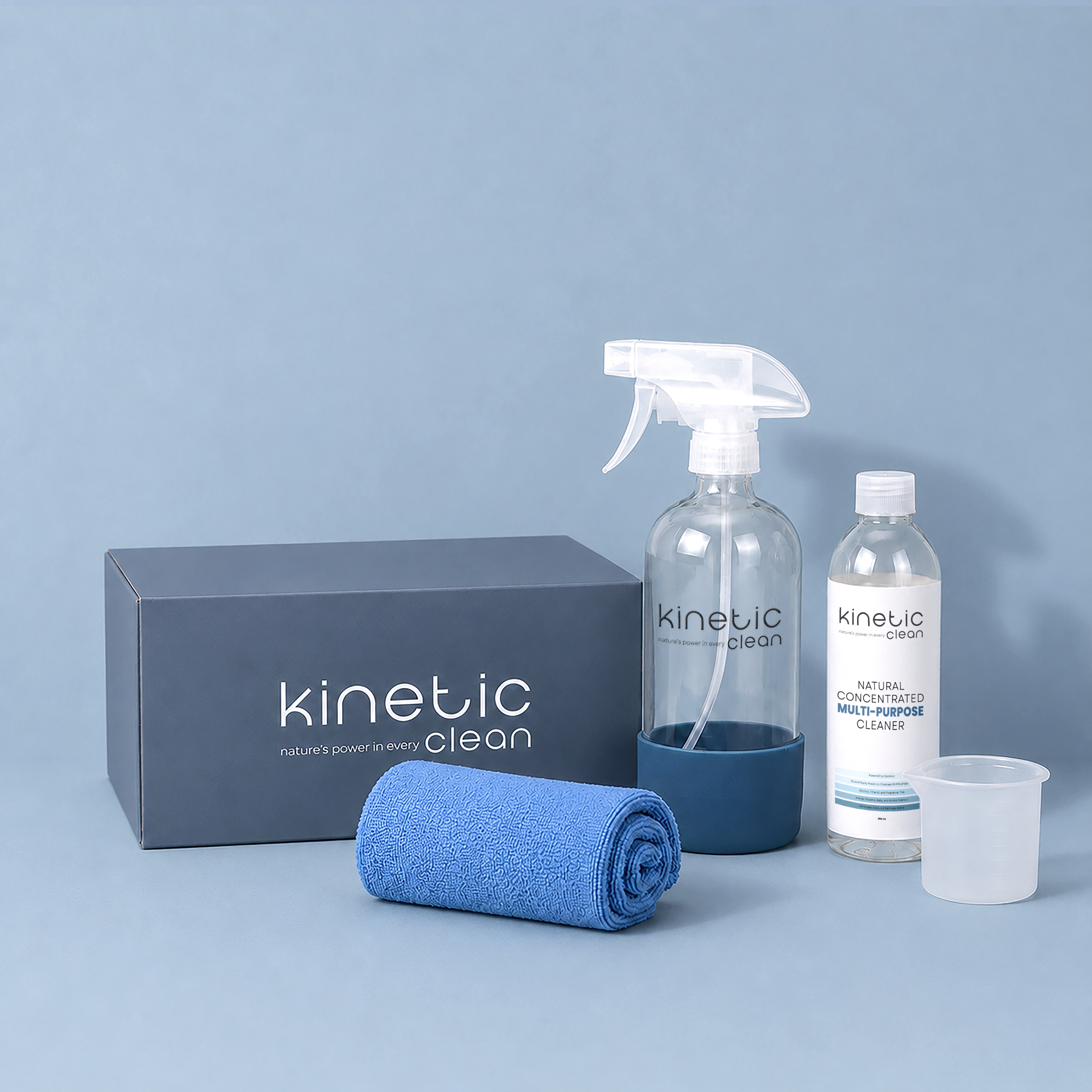
| Kitchen worktops, bathroom surfaces, floors | A fragrance-free multi-purpose cleaner, ideally a concentrate you dilute and apply with a cloth |
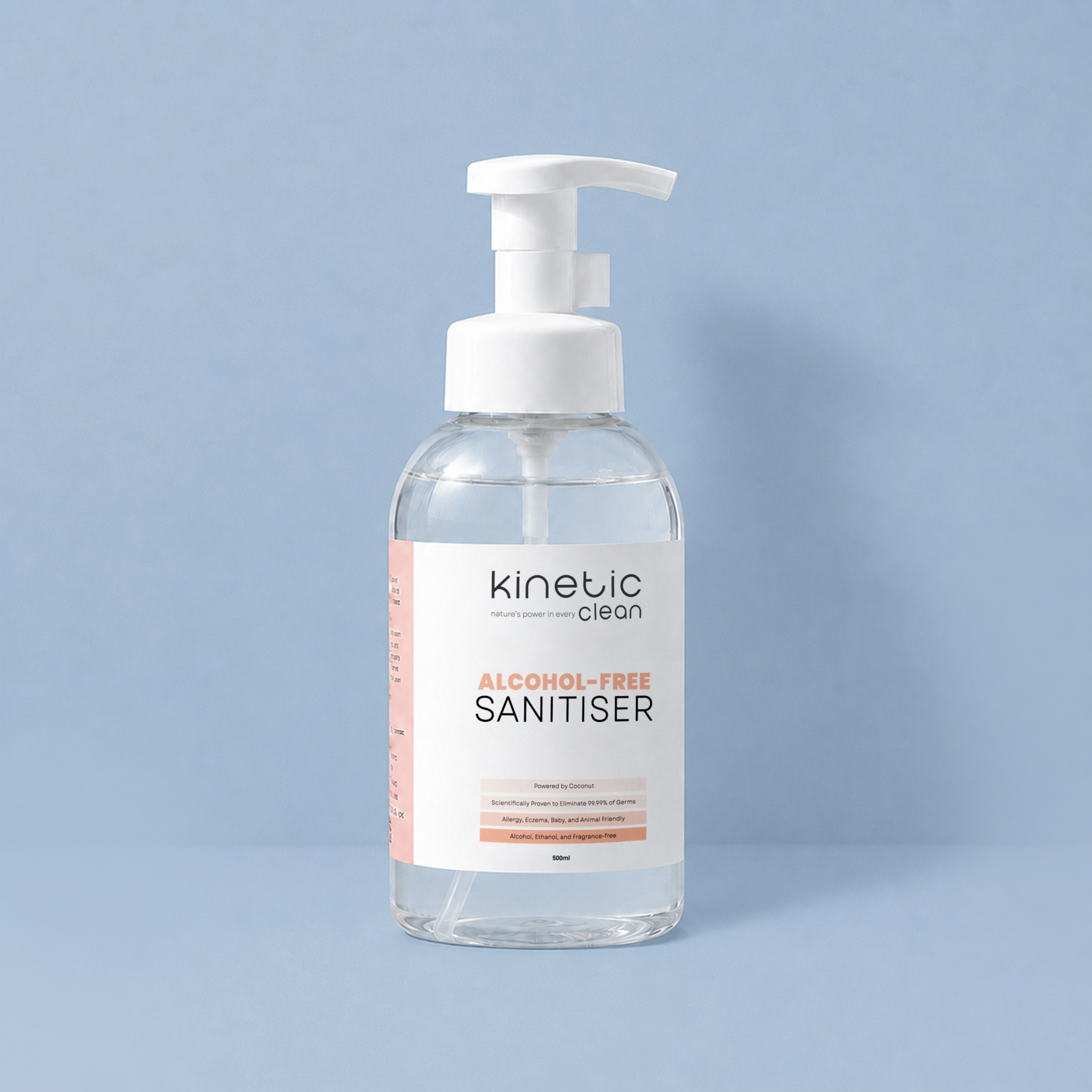
| Hands and high-touch surfaces | A sanitiser made without artificial fragrances and alcohols |
| Washing up | A brush that lets you use less product |
| Windows and glass | A damp cloth first, rather than an aerosol |
For wider help choosing, see our guide to non-toxic cleaning products for a healthier home and our explanation of disinfectant versus cleaner, which shows when you need one or the other.
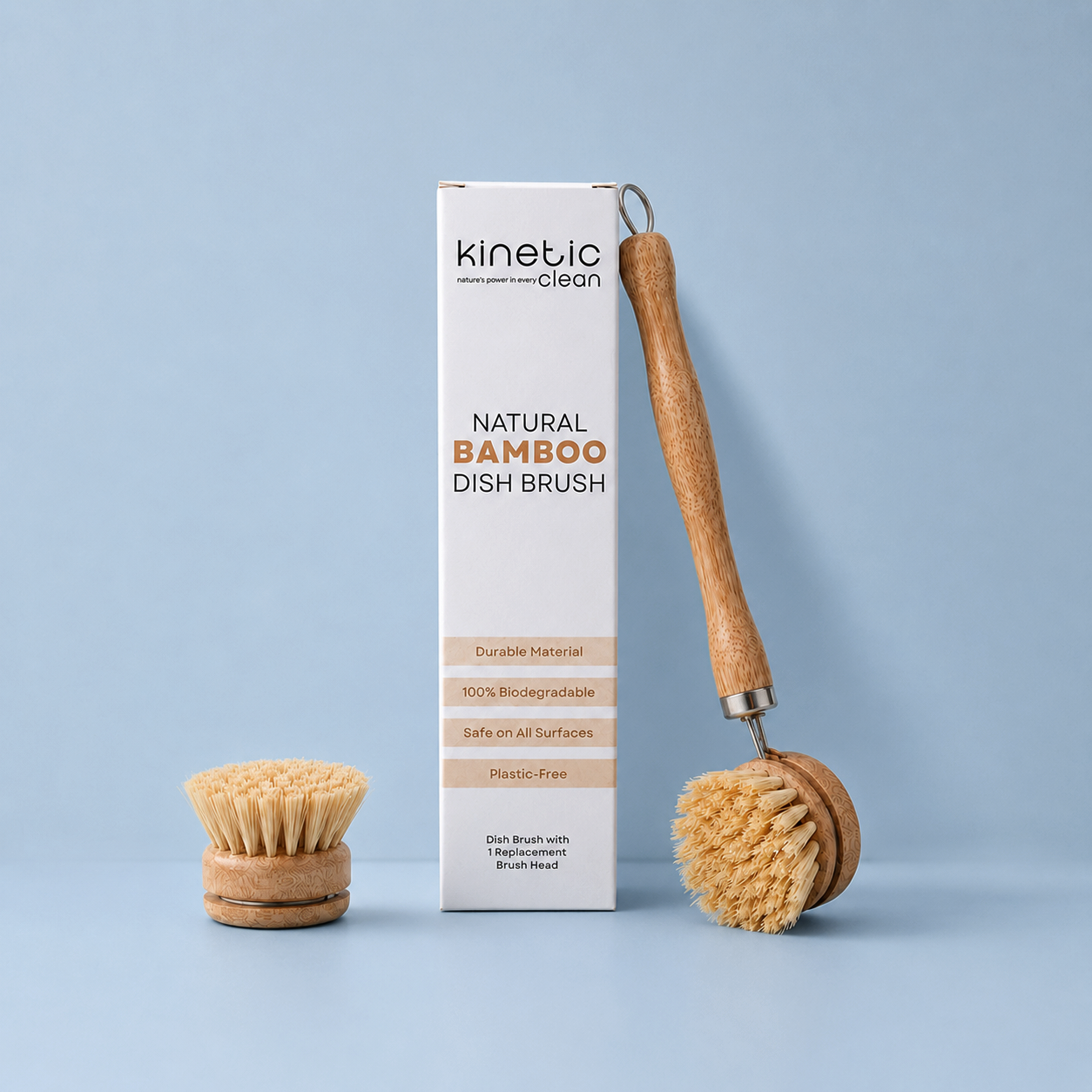
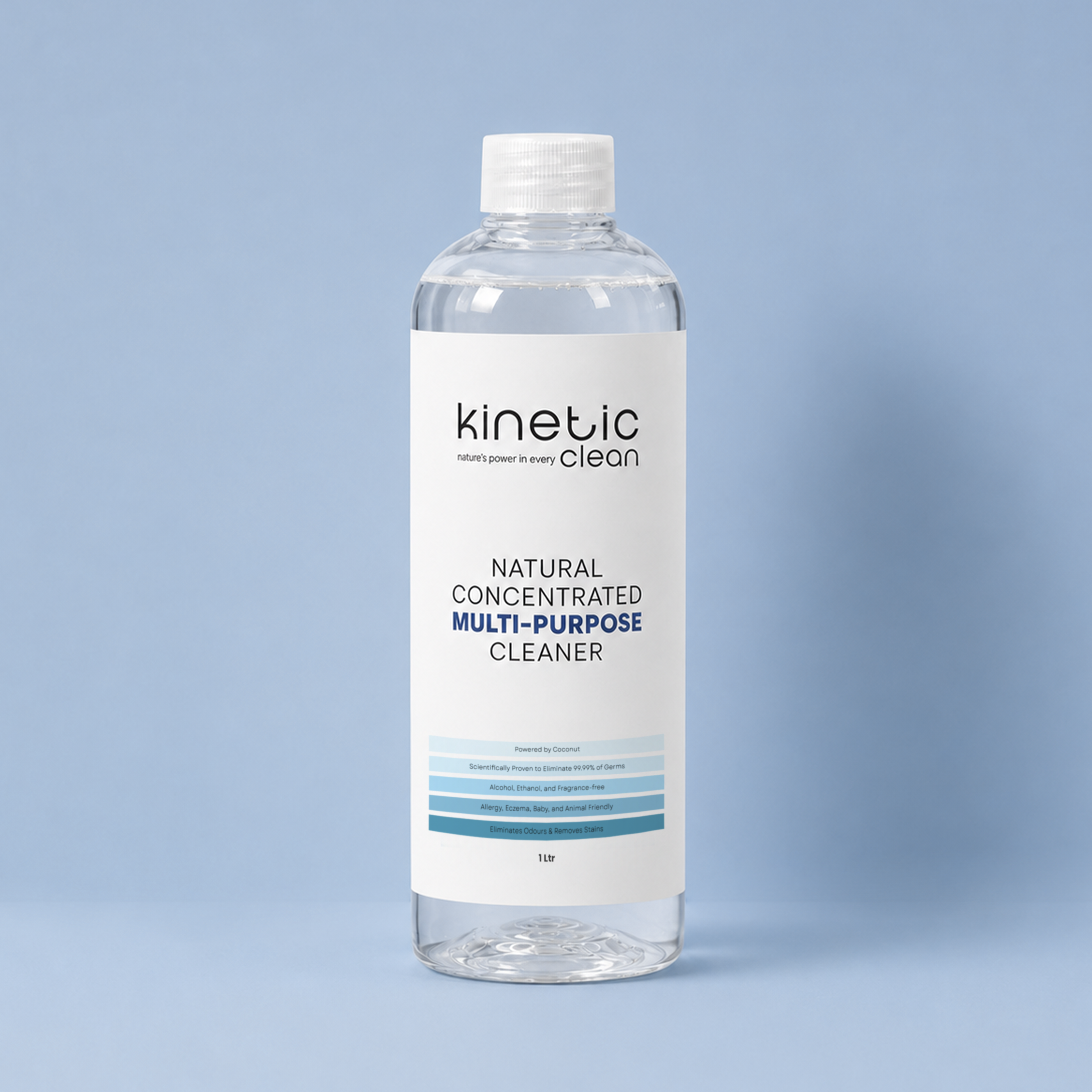
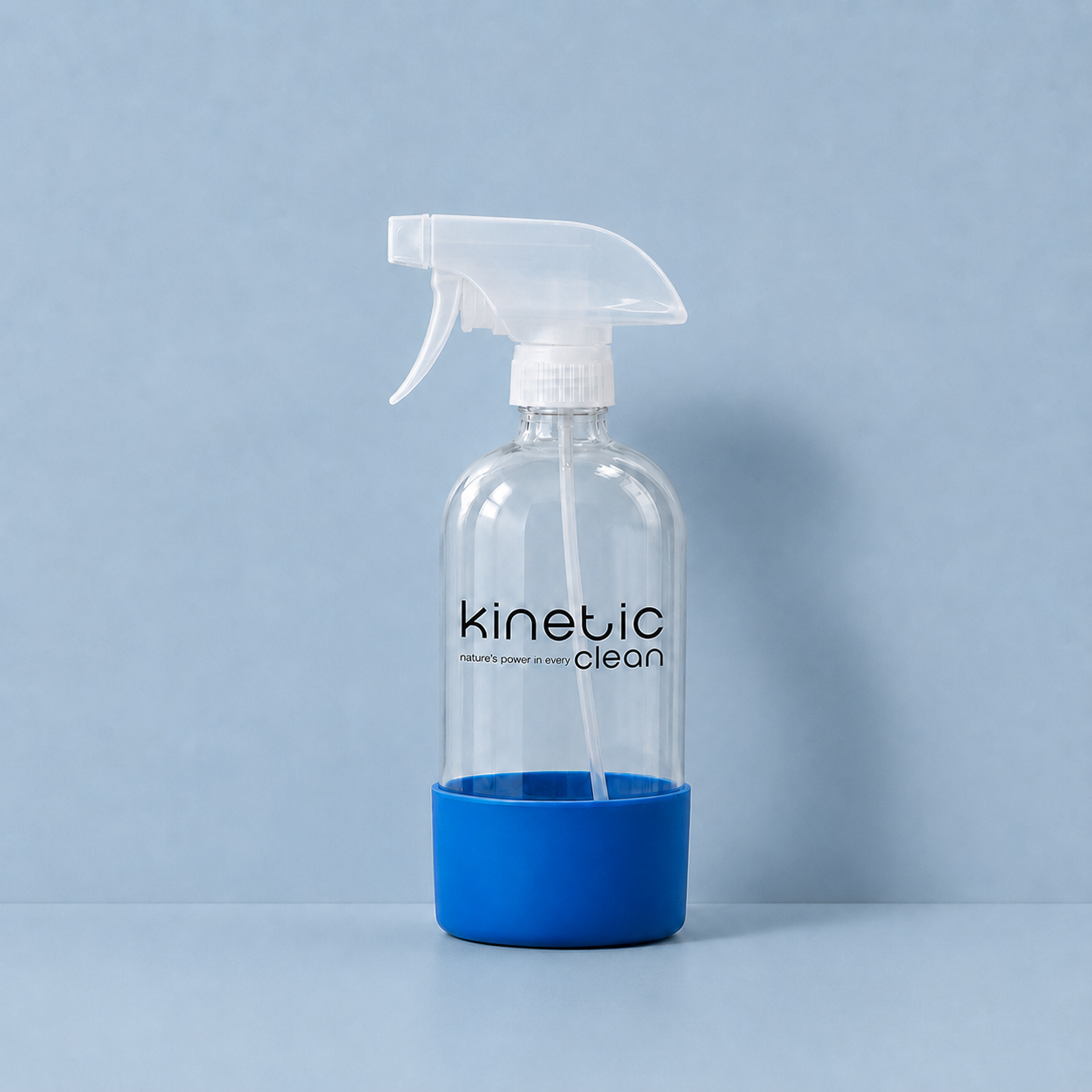
Kinetic Clean makes natural, non-toxic household cleaning products free from synthetic chemicals, artificial fragrances and alcohols, designed for families and health-sensitive people. The range includes:

If you are replacing sprays, scented cleaners and bleach-based products, the concentrate is the natural place to begin, and you can see the full range on our shop page.
We started from a simple idea: we would not put harsh chemicals on our skin, so we should not fill our homes with them. Cleaning is something families do every day, often with children nearby, which makes the air you breathe while you clean as important as the surface you are wiping.
Public health guidance keeps returning to the same points: ventilate, avoid sprays, avoid unnecessary fragrance and follow the label. Our products are made around that thinking, without synthetic chemicals, artificial fragrances or alcohols, so the choice at the cupboard is simpler.
We would rather you clean confidently and calmly than worry about every bottle. Start with the products you use most, swap them one at a time, and open a window while you work.
TekHive
Aerosol sprays, air fresheners, chlorine bleach, detergents, dishwashing liquid, furniture and floor polish, rug cleaners and oven cleaners are all listed by the American Lung Association as products that can release VOCs. Scented products are a major contributor, because fragrance compounds are volatile. Reading the ingredient list for fragrance, solvents and propellants is the quickest check.
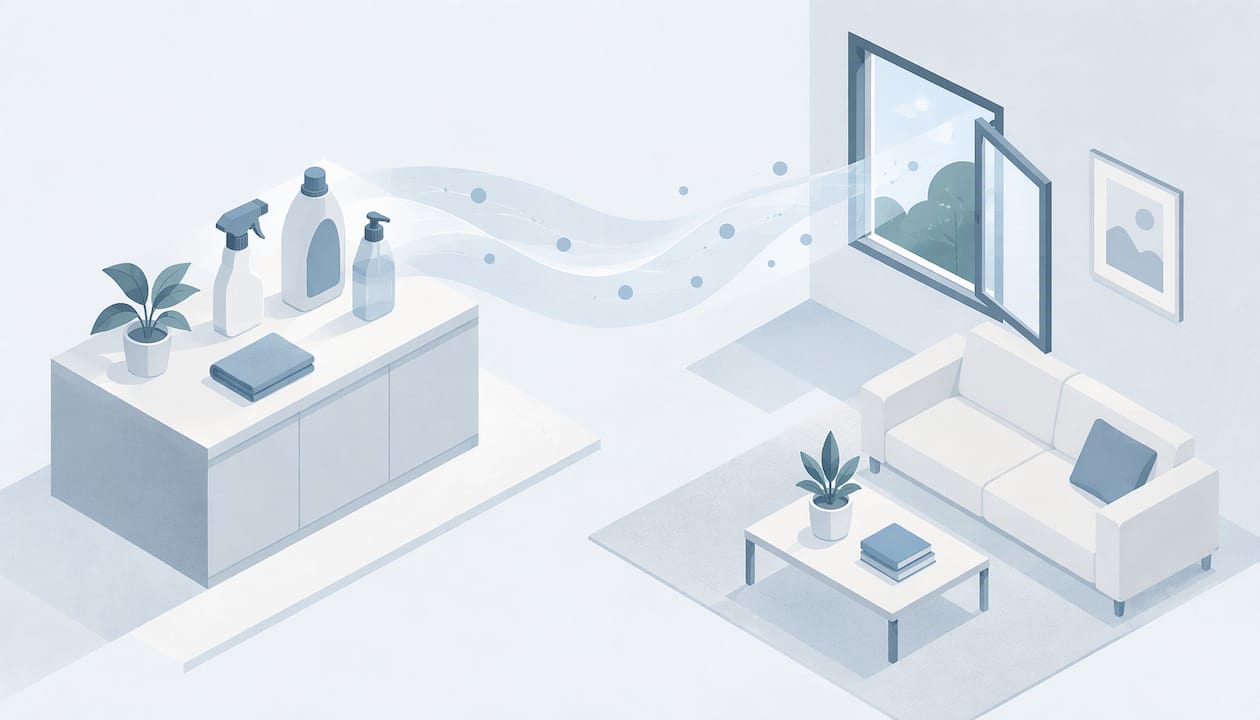
Open windows and doors, run the bathroom or kitchen extractor fan, and keep children and pets out until the room has aired. NICE advises increasing ventilation in this way when it is possible and safe. Prevention helps more than removal, so use less product and avoid sprays.
Asthma + Lung UK says babies and very young children are more affected by chemical emissions than adults. Choose fragrance-free products, avoid sprays and ventilate when cleaning rooms they use. If your child has asthma or wheezing, speak to your GP or asthma nurse about triggers.
Not automatically. Plant-derived fragrances such as citrus and pine oils are still volatile, and Asthma + Lung UK notes they can react in the air to form new chemicals. Look for a specific, fragrance-free statement and a full ingredient list rather than the word “natural” alone.