Cart
0
You may also like




You can clean a washing machine naturally with a hot empty cycle, white vinegar and bicarbonate of soda, plus ten minutes a month on the parts that actually hold dirt: the detergent drawer, the door seal and the filter. The same short routine works for a dishwasher. If you are trying to cut down on harsh chemicals at home, this is the gentlest place to start, because the drum is where your clothes, and your family’s skin, spend their time. At Kinetic Clean we make natural, non-toxic household cleaning products free from synthetic chemicals, artificial fragrances and alcohols, and we want the whole routine to follow the same principle.
A washing machine is warm, damp and shut most of the time. Softener, detergent and dirt build up over time and cause unpleasant smells, as Beko’s product manager explains. Low-temperature and liquid-detergent washes make this more likely, because less residue is flushed away.
The usual signs are a musty smell, a grey film on the drawer, black spots on the rubber door seal and clothes that come out smelling stale. None of this means the machine is broken. It means residue has had time to settle.
Different parts collect dirt at different speeds. Beko UK gives a practical schedule in its washing machine guide:
| Part | How often |
|---|---|
| Whole machine (hot empty cycle) | Every 1 to 3 months, depending on use |
| Detergent drawer | After every four to five washes |
| Filter (usually bottom right-hand side) | Every three months, or sooner if clogged |
| Door seal | Monthly |
LG UK suggests cleaning at least twice a year as a minimum to keep the machine in good condition. A household that washes daily, or one with babies and a lot of towels and bedding, will want to stay nearer the monthly end.
The natural kit is short and cheap:
The science is simple. White vinegar’s acetic acid dissolves mineral deposits, soap scum and mildew, while bicarbonate of soda is a mild alkali that neutralises odours, softens water and scrubs gently without scratching, according to the expert quoted in Martha Stewart’s cleaning recipe. Between them they deodorise, clean and maintain the drum.
This method suits most front-loaders, which are the norm in UK homes. Top-loaders use the same steps with larger amounts, noted below.
Pull back the rubber seal and look into the folds. Lint, hair and moisture collect there, and so does mould. Wipe the folds with a cloth dipped in a mix of vinegar and water. Do this before the hot cycle so loosened grime is not simply rinsed back into the drum.
Where it goes wrong: heavy vinegar spraying on the seal every time. LG UK advises avoiding frequent application near the rubber seal because it can cause corrosion over time, so use a cloth and keep it occasional.
Slide the drawer out (most have a release tab) and soak it in hot water for 20 to 30 minutes. LG UK suggests hot water with dishwashing liquid or vinegar. Scrub the compartments with the toothbrush, and do not forget the slot the drawer sits in, where a dark film often hides. Rinse and refit.
The filter catches coins, hair clips, lint and fluff. Place the towel under the small hatch, unscrew the filter slowly, let the water drain, pick off debris and rinse it under the tap. A clogged filter causes slow draining and a stale smell no cleaner will fix. Refit it firmly.
For a front-loader, Martha Stewart’s recipe uses half a cup of bicarbonate of soda in the drum and two cups of white vinegar in the dispenser or drum, then a hot-water cycle. For a top-loader it uses four cups of vinegar and one cup of bicarbonate, soaking for up to an hour before finishing with a short hot rinse.
Leave the drum empty. LG UK also describes an empty 90°C cycle with bicarbonate of soda to tackle odours coming from the seal. Check your manual for the hottest setting your machine allows, since not every model has one.
Machines with a built-in drum clean function make this easier: Beko notes its DrumClean+ runs at 70°C, and without such a function you should run an empty cycle at the hottest temperature with no detergent.

When the cycle ends, wipe the drum, the glass and the seal. Leave the door and drawer open so the inside can dry. This last step is the one most people skip, and it is the one that keeps the smell from returning.
Vinegar is a good natural helper, but how you use it matters. Laundry specialists quoted by Netmums say white vinegar belongs in the fabric-conditioner compartment for the rinse, not mixed with detergent in the wash, because the acid interferes with detergent. Their suggested amount is 100 to 150 ml for a standard hard-water load, up to 200 ml in very hard water.
Two points to keep in mind for safe use:
Our guide to which cleaning product combinations are dangerous covers the other pairings worth knowing about.
If you live in a hard-water area, limescale is likely the main culprit behind a stiff, dull drum and a coated heating element. Our piece on hard water and cleaning explains what changes and what helps.
Black spots on the seal are the most common complaint. For light mould, a cloth wrung out in equal parts warm water and white vinegar, worked into the folds, usually shifts it. Leave it for 15 minutes or so, wipe with a damp cloth and fresh warm water, then dry the seal.

Our guide to removing mildew without bleach goes through the method in more detail for UK homes.
Prevention matters more than removal. Leave the door open after each wash, dry the seal with a cloth, and keep the drawer slightly ajar. If mould has crept beyond the machine and onto the bathroom or utility room sealant around it, this guide to mouldy silicone helps you decide whether to clean it or replace it.
For persistent odours that return straight after cleaning, drainage problems, strange noises, leaks or mould behind panels, call a qualified appliance engineer. These point to a fault rather than residue.
The dishwasher follows the same logic: remove trapped food, dissolve mineral film, keep it dry. Here is a routine built from UK appliance guidance.
Appliances Direct advises rinsing the filter under running water weekly. Twist it out from the base, wash away food particles and refit it. Food left here is the commonest cause of a dishwasher smell.
The same guide suggests running a cycle with a bowl of one part white vinegar to two parts water on the top rack, then sprinkling bicarbonate of soda in the bottom and running a hot rinse. Run both with the dishwasher empty.
The Hotpoint dishwasher manual says interior marks can be removed with a cloth dampened with water and a little vinegar, and door and dispenser seals should be cleaned regularly with a damp sponge. Spray arms should be checked from time to time and cleaned with a small non-metallic brush, and the water inlet filter at the tap cleaned regularly. It also warns against solvents or abrasive products on external surfaces, so keep to a soft cloth outside.
A quick check for the spray arms: spin them by hand and look for blocked holes. A cocktail stick or a soft brush clears most of them.
Pick one day a month and do the machines together. Fifteen minutes is enough once the habit is set.
For residue, odour and light mould, yes: acids dissolve minerals and soap film, and heat does the rest. The results depend on regular use, not strength. Our article on what the evidence says about natural cleaners sets out when natural cleaning is enough and how to get the most from it.
Most people think of a washing machine as something that cleans itself, because it is full of water and soap. In practice it is a closed, damp space where detergent, softener and fibres settle, and the smell that follows is a sign of that residue, not of a dirty household.
We started Kinetic Clean on a simple belief: we would not put harsh chemicals on our skin, so we should not use them to clean the spaces we live in. That belief applies to the machine that washes your children’s clothes and the dishwasher that cleans their plates. Many conventional cleaners rely on synthetic chemicals, artificial fragrances and alcohols that can irritate skin and lungs, and a natural routine removes the need for them.
The routine in this guide is deliberately small: hot water, a gentle acid, a mild alkali, a brush and a dry door. Add a multi-purpose concentrate free from synthetic chemicals, artificial fragrances and alcohols for the wiping and the surfaces around the machine, and the whole job stays gentle on the people who live there.
TekHive
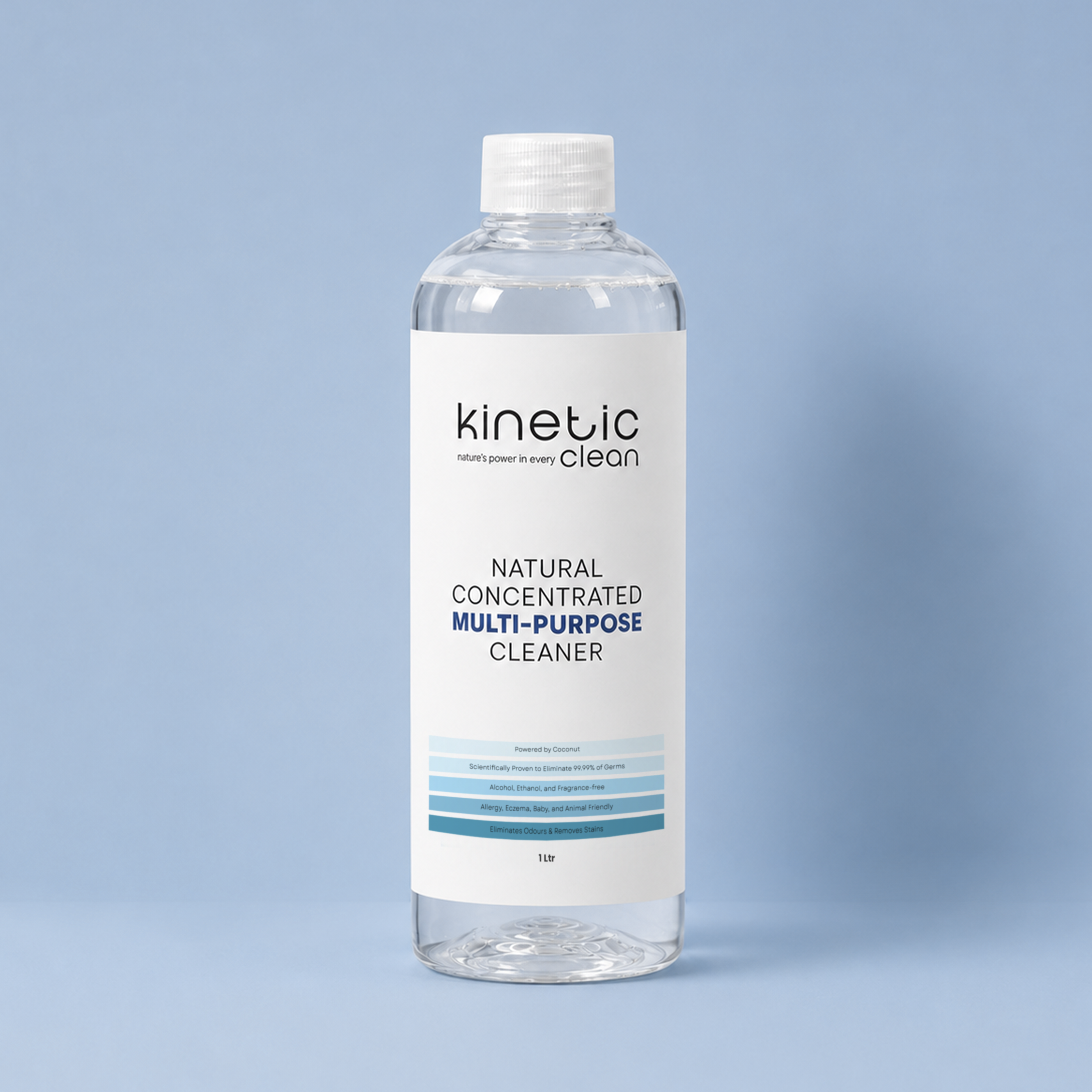
Once the machine is clean, the surrounding surfaces need attention too: the door, the drawer front, the worktop above, the splashes on the floor. Our Multi-Purpose Concentrate is made free from synthetic chemicals, artificial fragrances and alcohols, so it fits the same non-toxic approach as the rest of this routine. You can see the range on our Kinetic Clean home page, where the 1L Concentrate Formula and the 250ml Concentrate Formula are listed.

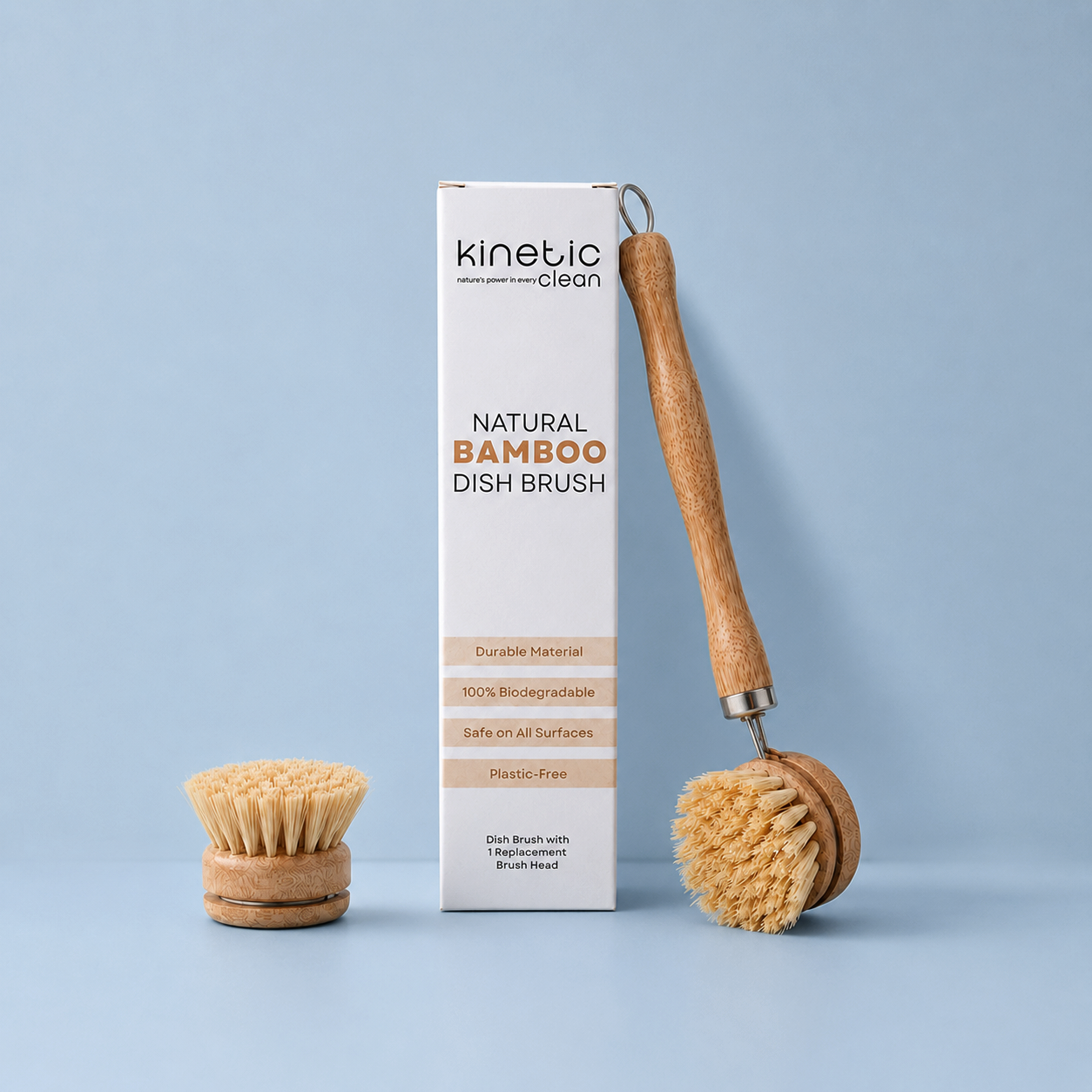
For the washing-up side of the kitchen, the Bamboo Dish Brush is listed from £2.99.
Run a hot, empty cycle with white vinegar in the dispenser or drum and bicarbonate of soda in the drum. Before that, clean the drawer, filter and door seal by hand, and afterwards wipe the drum and leave the door open to dry. Repeat every one to three months.
Yes. A hot cycle on its own already helps: Beko advises running an empty cycle at the hottest temperature with no detergent when your machine has no self-clean function. Combine it with hand-cleaning the drawer, filter and seal and keeping the door open between washes, and most machines stay fresh.
No. White vinegar must never be mixed with chlorine bleach, because the combination can release dangerous chlorine-based gases. Use one at a time, run a rinse cycle in between and ventilate the room.
Rinse the filter weekly, and run a vinegar and bicarbonate cycle every few weeks, as Appliances Direct advises. Check seals and spray arms from time to time, and wipe them with a damp sponge or a small non-metallic brush.
Mix equal parts warm water and white vinegar, work it into the folds with a cloth, leave it for about 15 minutes, then wipe with a damp cloth and warm water. Dry the seal afterwards and leave the door open after every wash to stop it returning.