Cart
0
You may also like


A cleaner removes dirt, grease and grime from a surface. A disinfectant kills bacteria and viruses on it. They do different jobs, and in most homes the cleaning comes first and does most of the daily work. UK government guidance says detergents clean the surface and remove grease but do not kill bacteria or viruses, while disinfectants kill both and should go on a visibly clean surface.
This guide explains the difference in plain terms, shows how to read a label, and sets out when each one earns its place in a family home.
Think of it as removal versus kill.
A cleaner (a detergent, such as washing-up liquid or an all-purpose spray) lifts dirt, grease and food residue so it can be wiped or rinsed away. NHS Borders describes detergents as products that dissolve grease, oil and dirt, and describes disinfectants such as bleach as powerful agents that kill germs.
A disinfectant is formulated to destroy bacteria and, depending on the product, viruses. It is not designed to lift grime, which is why it struggles on a dirty surface.
A sanitiser sits in between. GOV.UK explains that sanitisers kill bacteria but may not kill viruses, and can be used in a two-stage approach to clean and disinfect.
| Cleaner (detergent) | Sanitiser | Disinfectant | |
|---|---|---|---|
| Main job | Removes dirt, grease, residue | Reduces bacteria | Kills bacteria and, where stated, viruses |
| Removes visible soil | Yes | Depends on the product | Not its purpose |
| Needs a clean surface first | No | Often | Yes, unless the label says it also cleans |
| Contact time matters | Rarely | Check label | Yes |
| Everyday use | Yes | Targeted | Targeted |
Dirt shields germs and uses up the active ingredient in a disinfectant. The NHS South Warwickshire CCG fact sheet states that a disinfectant will not be effective if dirt or visible soiling is present, and that cleaning with warm water and neutral detergent is a prerequisite to effective disinfection.
The same fact sheet points out that cleaning physically removes contamination but does not necessarily destroy micro-organisms. That is why the two steps are complementary, not rivals.
Food Standards Scotland gives the same sequence for kitchens: cleaning removes food debris and visible dirt with hot water and detergent, and disinfection follows on a visibly clean surface. Its guidance also notes that cleaning alone will not remove all bacteria.
A disinfectant does not work the instant it touches a surface. GOV.UK stresses that specified contact times must be followed for the product to be effective. If you spray and wipe immediately, you have mostly cleaned the surface, not disinfected it.
The contact time is printed on the label, and it differs between products. Dilution matters too: NHS Borders advises following the dilution instructions on the bottle when using diluted household bleach on surfaces that cannot be properly rinsed.
Sometimes. The NHS South Warwickshire CCG fact sheet notes that some disinfectant products contain both a detergent and a disinfectant, so a separate cleaning step is not needed. If the disinfectant has no detergent in it, clean first.
How to tell from the label:
For professional kitchens, Food Standards Scotland says any disinfectant used should meet BS EN 1276 or BS EN 13697. Those standards are a useful reference point when a label quotes them.
Most of a home’s hygiene comes from cleaning the right places often enough. Oxfordshire Family Information Service advises that germ hotspots such as the kitchen and toilet should be cleaned regularly after use, rather than relying on a once-a-week deep clean.

This fits what researchers call targeted hygiene. In a UK peer-reviewed paper, Sally Bloomfield describes an approach that focuses on the places and times that matter rather than trying to create a germ-free home. The same paper notes that around 1 in 6 people in the UK belong to an “at risk” group for infection, which is a good reason to be deliberate in homes with newborns, older relatives or people with weakened immunity.
NHS Borders also notes that germs can survive for up to 24 hours even on dry surfaces, which is one reason regular cleaning of busy surfaces matters.
It is worth keeping perspective on over-cleaning. The BBC reports that antibacterial products are effective only in the very short term, and that excessive cleaning may not be key to limiting microbe exposure. A steady, targeted routine beats constant blanket disinfecting.
A dirty cloth moves germs around instead of removing them. Use a clean cloth for each task, launder cloths regularly, and let tools dry fully between uses, because damp materials stay contaminated longer. The same principle applies to worktops and chopping boards: dry them thoroughly after washing. If you are also looking after fittings around the house, a guide on cleaning aluminium window frames shows the same logic of using the right tool and drying the surface afterwards.
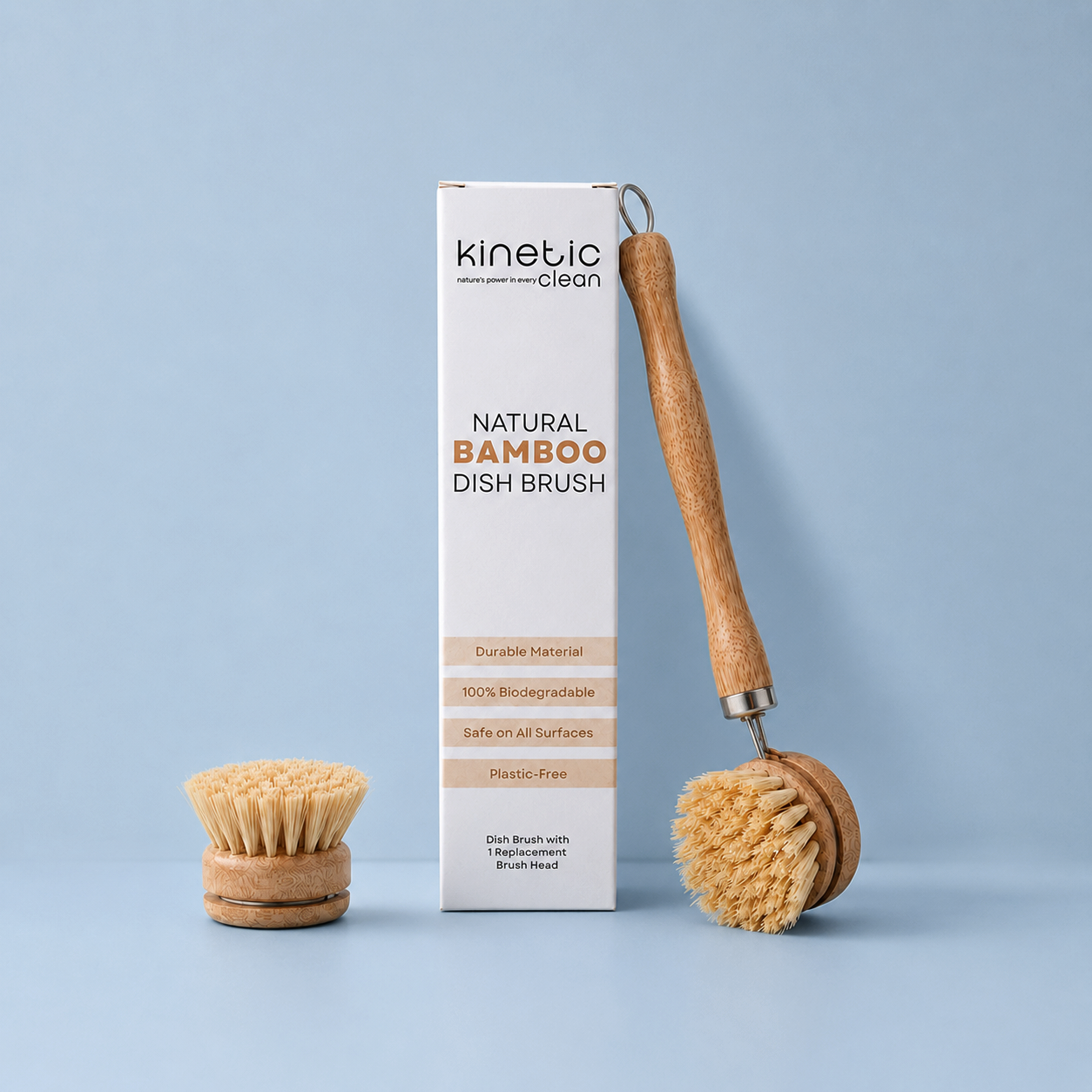
A bamboo dish brush with a replaceable head is an easy way to keep a dedicated tool for dishes that dries quickly on the rack.
The most serious risk in cleaning is combining products. London Fire Brigade warns that each combination can produce harmful gases, liquids or fumes that build up quickly indoors and can cause serious illness or death.
Its safety advice covers:
If you notice fumes, open windows, leave the area and keep children and pets out.
Families often want to reduce how many harsh ingredients they bring into the house, especially around children, pets and sensitive skin or airways. A few practical checks help:
Home mixes can clean, but they are not automatically safer or greener. The German agency states that making up a cleaning product yourself is no guarantee that it is environmentally friendly or free of health hazards, and advises against orange oil, which contains the allergen limonene, and vinegar essence, which is corrosive and can damage chrome.
The Irish EPA describes baking soda (pH around 8.1) as a cleaner, deodoriser and mild abrasive, and soda crystals (pH around 11) as effective but caustic enough to need gloves. Neither is presented as a disinfectant. If you want reliable, consistent results without measuring and mixing, a formulated product with a clear label is simpler.
Our perspective
At Kinetic Clean, we start from a simple idea: if we would not put harsh chemicals on our skin, we should think twice before spraying them around the rooms we live in. Many conventional cleaning products rely on synthetic chemicals, artificial fragrances and alcohols that can irritate skin and lungs.
That is why we focus on cleaning that works through good formulation and good habits. Our products are made without synthetic chemicals, artificial fragrances or alcohols, and are designed for families and health-sensitive people who want a safer way to keep a home clean.
In our view, the strongest routine is a simple one: clean surfaces thoroughly and regularly with a gentle, effective formula, use a sanitiser where you want an extra step, and always read and follow the label of whatever you choose.
TekHive
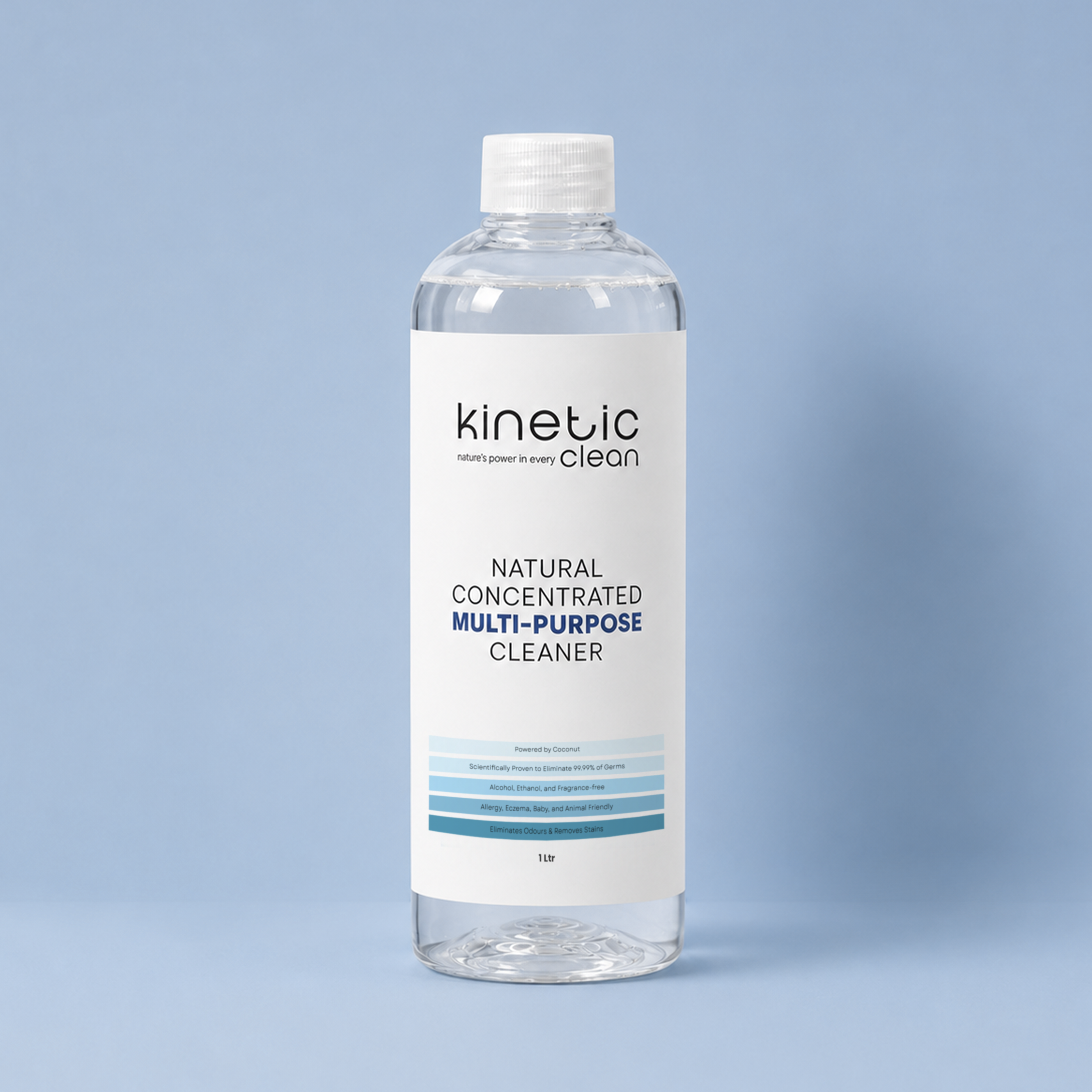
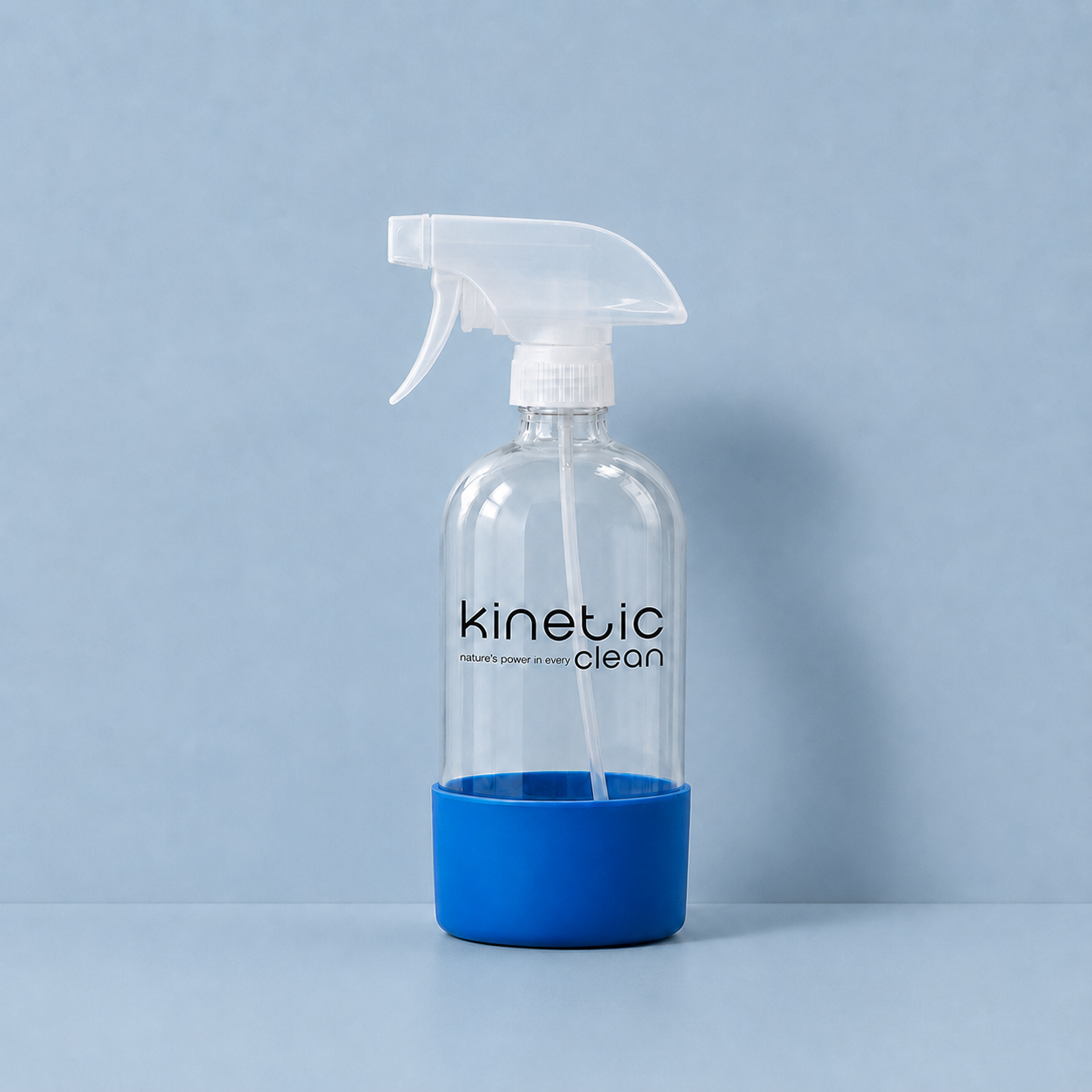
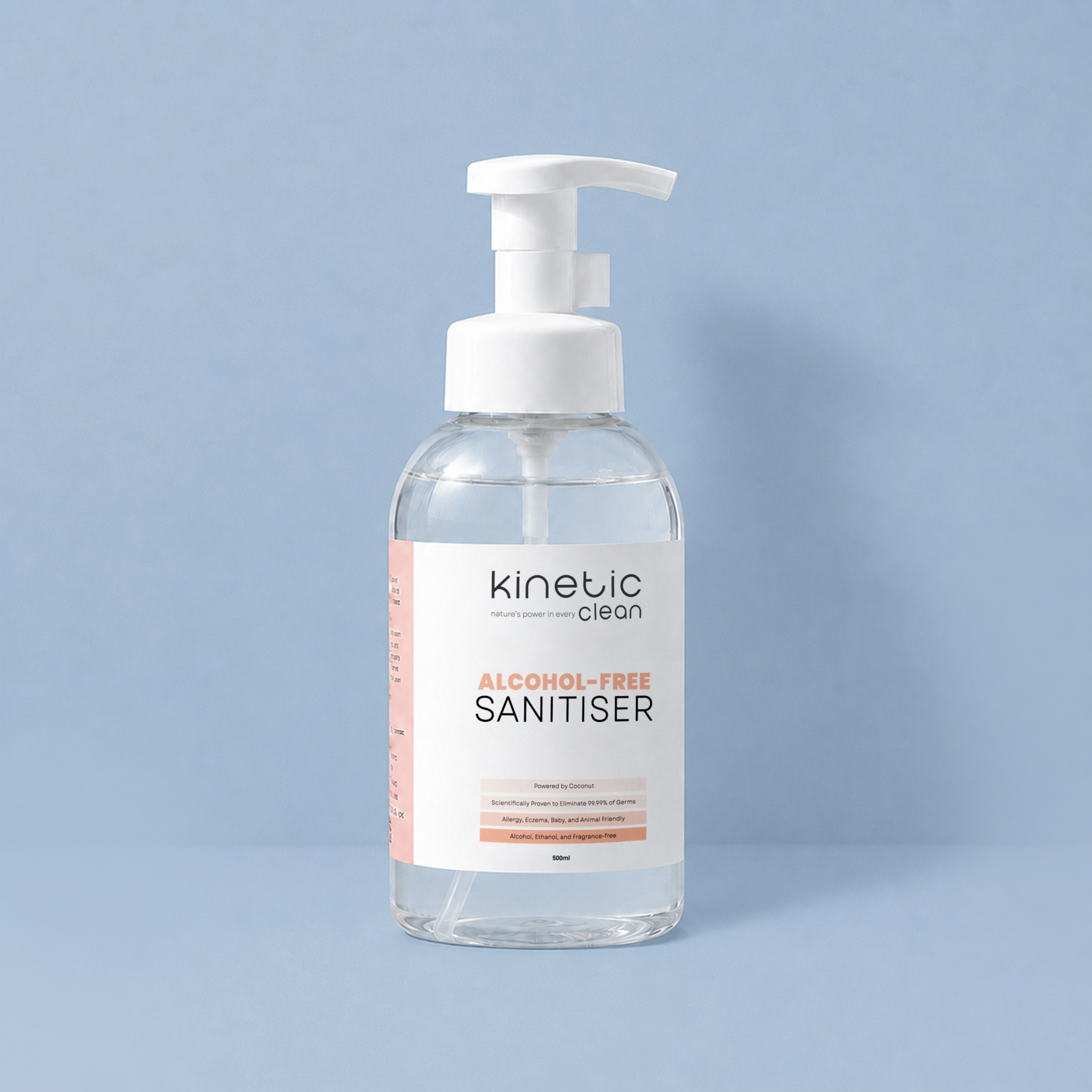
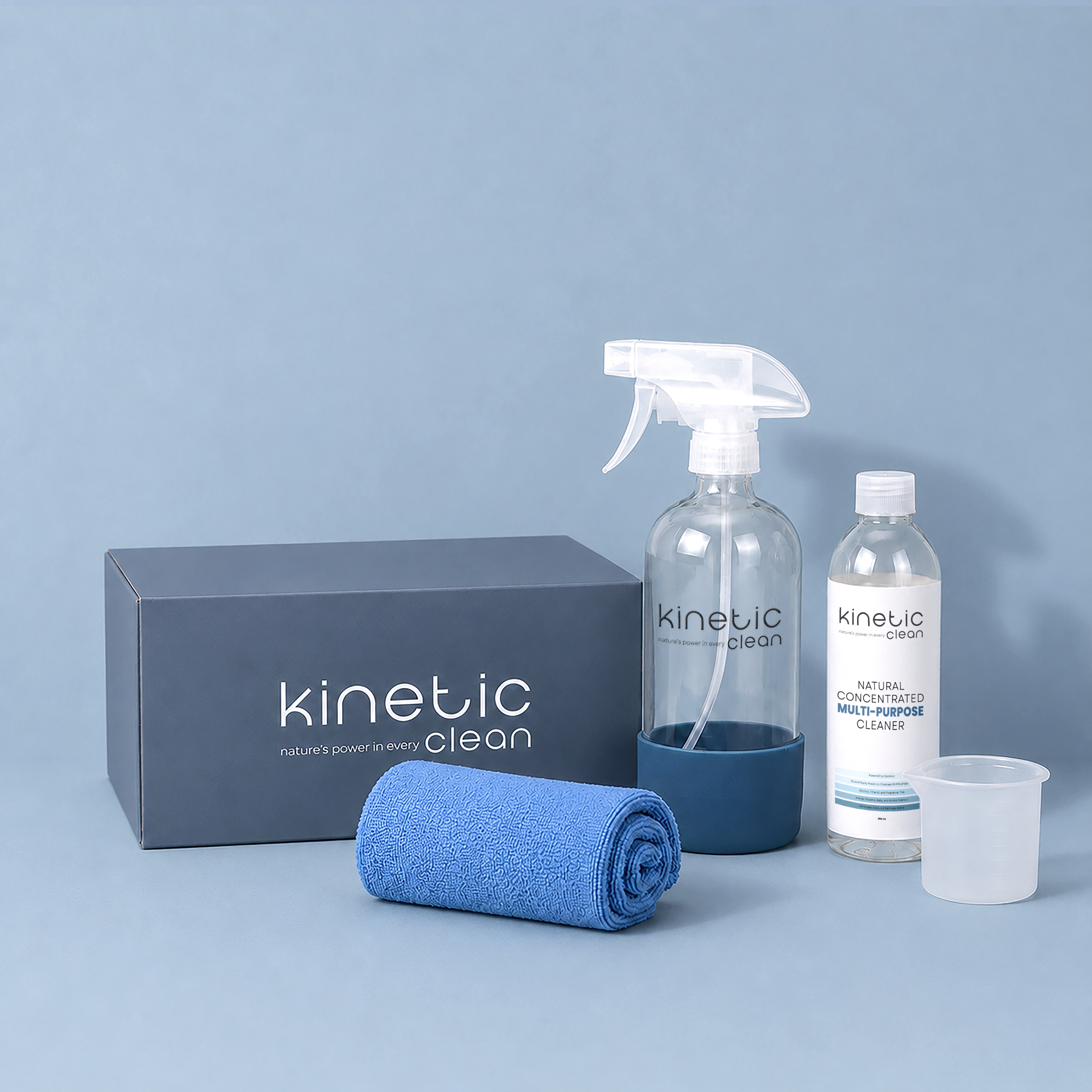
If you want a routine built around fewer harsh ingredients, our Multi-Purpose Concentrate and Kinetic Clean Sanitiser are designed for exactly that: natural, non-toxic household cleaning free from synthetic chemicals, artificial fragrances and alcohols.

The 1L Concentrate Formula is made to be diluted, so a single bottle goes a long way, and the Kitchen & bathroom collection brings together the products for the two rooms where hygiene matters most. Our Bamboo Dish Brush starts from £2.99. Always follow the usage directions on each product label.
Neither is better, because they do different jobs. A cleaner removes dirt and grease, while a disinfectant kills germs, and it works best on a surface that has already been cleaned. For most daily tasks, cleaning is what you need.
Usually, yes. The NHS South Warwickshire CCG fact sheet says disinfectant is less effective where dirt is present. The exception is a product that contains both a detergent and a disinfectant and says so on its label.
For as long as the label’s contact time says. GOV.UK guidance stresses following the specified contact times. Wiping it away sooner means the surface may not be properly disinfected.
No. Mixing products can release harmful gases, and London Fire Brigade warns against combining bleach with many common products. Use one product at a time, rinse between them and ventilate the room.