Cart
0
You may also like


Hard water makes cleaning harder because the calcium and magnesium in it work against soap and detergent, then dry into chalky marks on every surface they touch. The fix is not harsher products. It is a short routine: dry surfaces after use, clean little and often, use the right dose, and match your appliance settings to your local hardness. Done that way, you can keep a hard-water home clean with gentle, non-toxic products. Our Multi-Purpose Concentrate is made for exactly that kind of everyday upkeep, without synthetic chemicals, artificial fragrances or alcohols.
Water picks up minerals as it passes through rock, chalk and limestone. Water with a high concentration of calcium and magnesium is called hard. It is not a health problem in itself, and the Drinking Water Inspectorate, the body that regulates drinking water quality in England and Wales, notes that UK drinking water regulations set no hardness standard. What it does affect is your home.
The same Inspectorate page lists the everyday signs: less lather from soap, washing-up liquid and washing powder, “tide marks” on basins, sinks, baths and toilets, and scale building up in kettles and appliances. It also cites World Health Organization guidance that water at 200 mg/l or higher (measured as calcium carbonate) will produce scale.
Hard water is common across much of the UK, particularly in the south and east of England. Your water supplier publishes hardness information by postcode, and it is worth looking up before you change anything, because the right dishwasher setting and laundry dose depend on it.
There are three separate problems, and each needs a slightly different answer.
Soaps and detergents rely on ingredients called surfactants, which lift grease and dirt off a surface so it can be rinsed away. In hard water, calcium and magnesium bind to some of those ingredients before they reach the dirt. Netmums describes this as minerals grabbing detergent before it can act on stains. The result is weak lather and a clean that feels incomplete, which is why many people respond by adding more product.
Every droplet left on a tap, glass shower screen or tile carries dissolved minerals. When the water evaporates, the minerals stay as a white, cloudy film. Left alone, the film builds into hard limescale, and it is much harder to remove than a fresh mark.

Soap reacts with hard water minerals and leaves a dull, sticky residue rather than rinsing away cleanly. That is the grayish film on shower walls and the ring around the bath. If this is your main complaint, our guide to removing soap scum naturally covers the bathroom in detail.
Cleaning experts keep returning to one point: prevention beats scrubbing. Carolyn Forte, former executive director of the Home Care & Cleaning Lab, says the simplest way to stop hard water stains is to wipe glassware, taps, sinks and shower doors with a soft cloth so water does not dry and leave minerals behind. This advice appears in Good Housekeeping UK, and a whole-home softener is the fallback if that feels like too much of a chore.
An Ideal Home writer who lives in a hard-water area describes the same routine: squeegee the shower straight after use, and wipe taps and surfaces with a microfiber cloth. It takes under a minute, and it removes the thing limescale is made of.
A practical version for a busy household:
The last point matters. A light wipe with a gentle cleaner removes soap film and fresh mineral spots before they harden, so you never reach the stage where a strong chemical descaler feels necessary.
Families with young children, pets, asthma or sensitive skin often hesitate to use heavy-duty bathroom products in small, poorly ventilated rooms. That caution is reasonable, and a hard-water home does not change it. What changes is the method.
Because lather is weaker in hard water, it is tempting to add extra product. More lather does not mean a better clean. Use the dose on the label, apply it to a damp cloth or surface, give it a moment to work, and rinse thoroughly so no product film is left to join the mineral film.
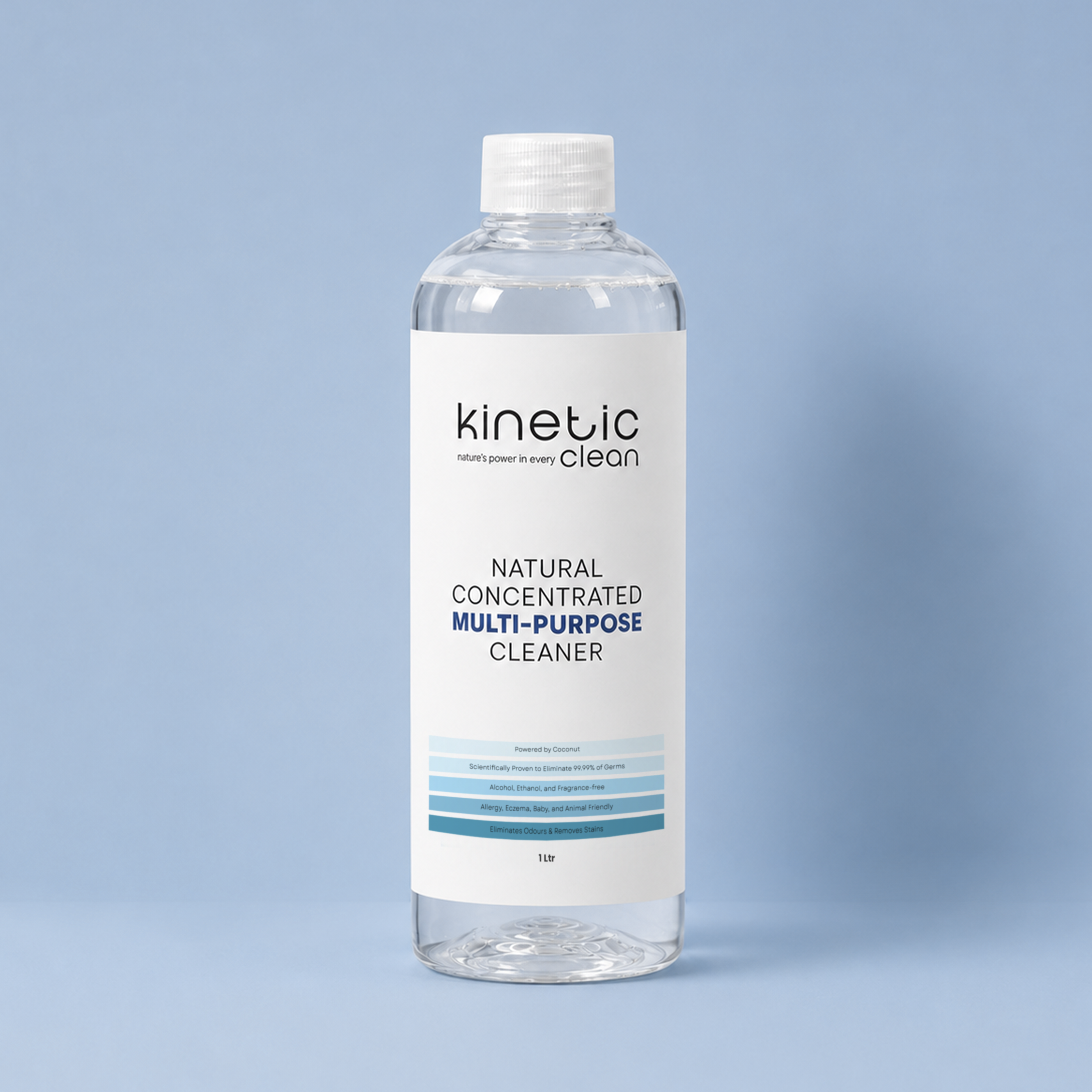
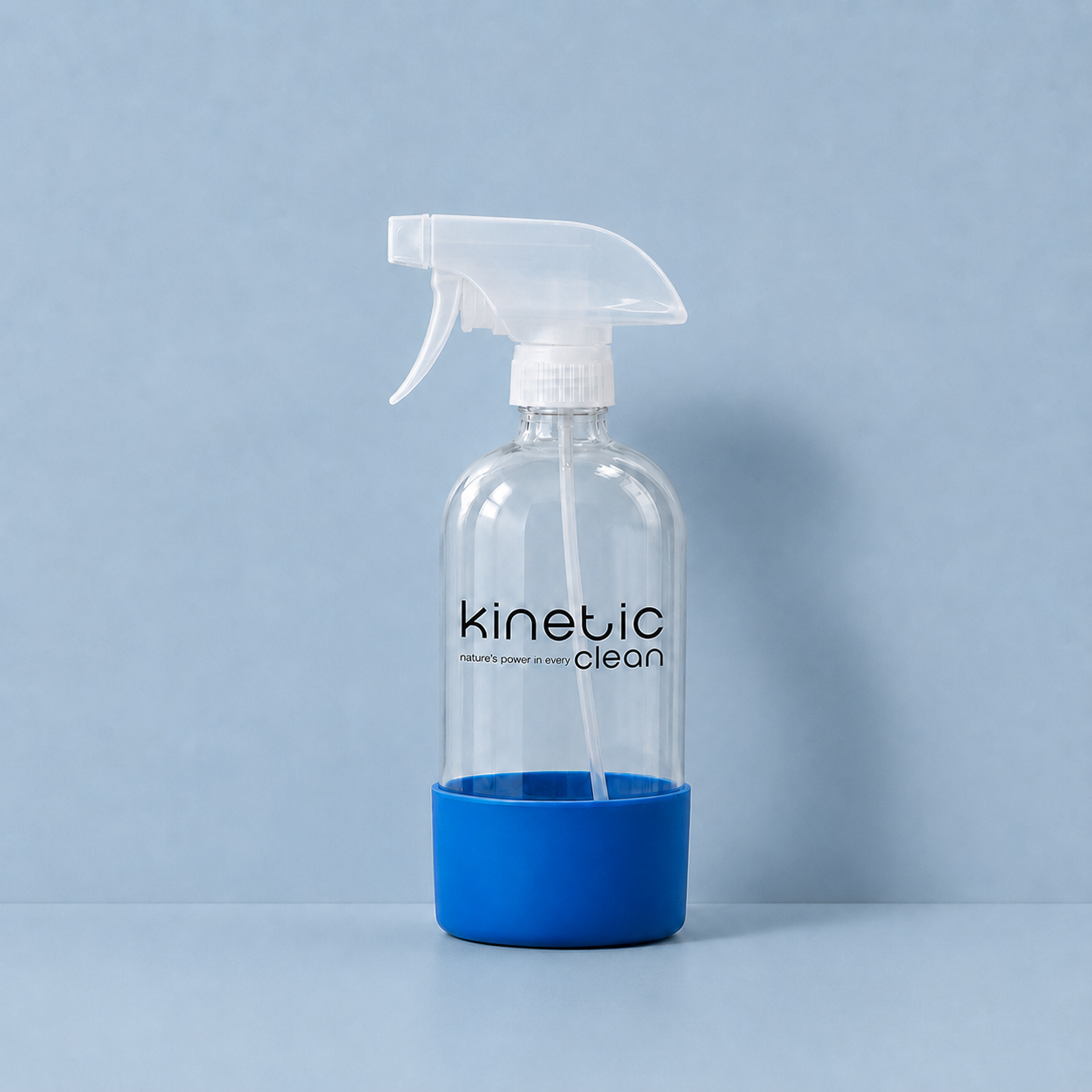
A concentrated all-purpose cleaner diluted at home is practical in a hard-water household because you use it daily, in small amounts, on many surfaces: worktops, hobs, sinks, taps, tiles and bathroom fixtures. Our Multi-Purpose Concentrate is a natural, non-toxic formula free from synthetic chemicals, artificial fragrances and alcohols, designed for families and health-sensitive people who want a safer product for the everyday clean. Pair it with the Glass Spray Bottle 500ml and you have a ready-to-use spray beside the bathroom sink.
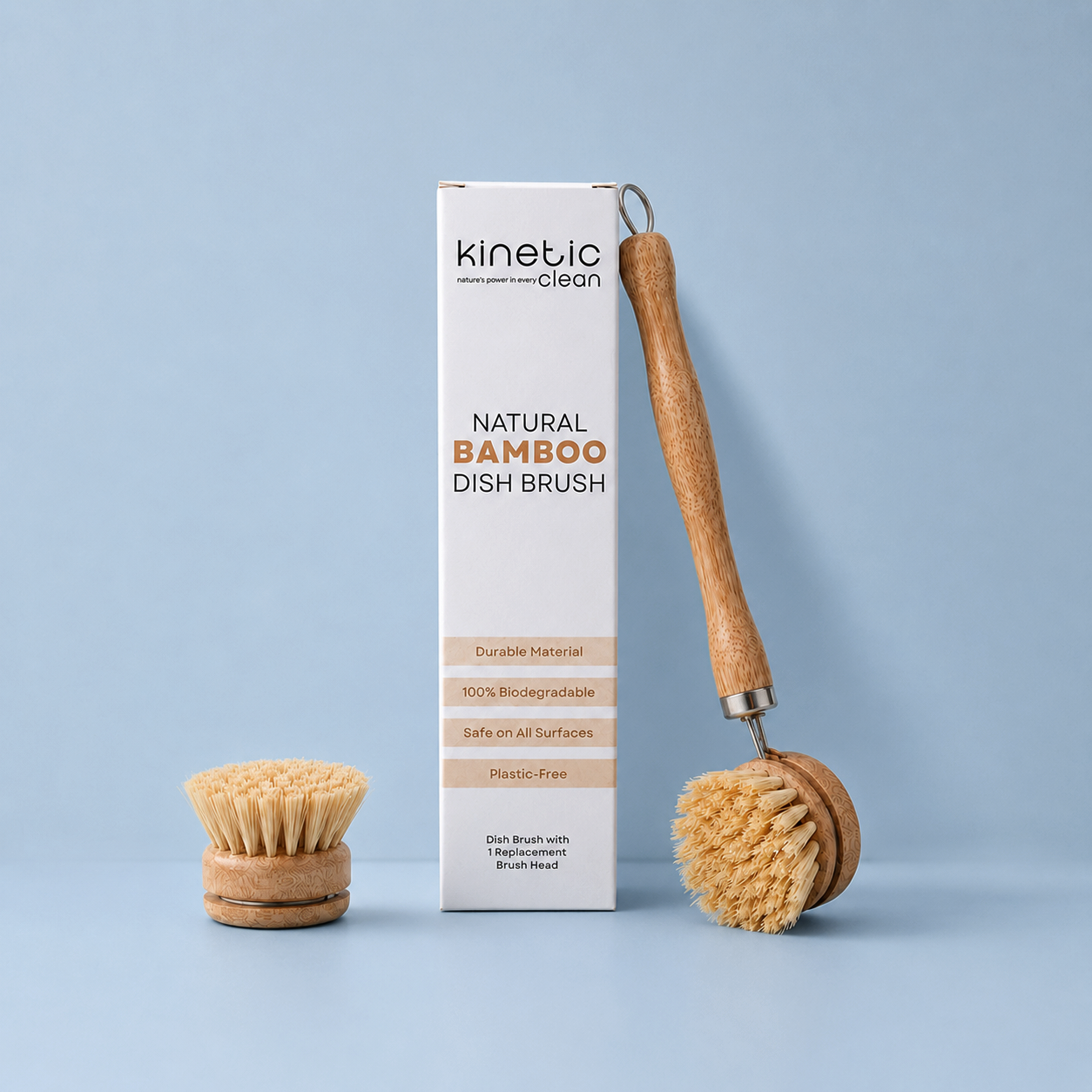
Scouring powders and rough pads scratch taps and enamel, and scratches trap minerals and soap. A soft cloth, a microfiber towel and a brush for awkward corners do the job. For dishes, our Bamboo Dish Brush is available from £2.99.
Not every metal reacts the same way to cleaning products. If your hard-water marks are on pans and hobs, see our guide to a non-toxic aluminium cleaner, and for taps and fittings in brass, our brass cleaner guide explains a gentle approach.
The bathroom is where hard water shows most. If you are also planning to refit it, a bathroom surface care guide gives useful context on how finishes and materials age.
| Where it shows | What you see | Best routine |
|---|---|---|
| Taps and sink | White, chalky film | Dry with a soft cloth after use; light daily wipe |
| Shower screen and tiles | Cloudy spots, soap film | Squeegee after each shower; gentle cleaner a few times a week |
| Bath and basin | Tide marks, gray ring | Wipe little and often; rinse thoroughly |
| Kettle | Flaky scale inside | Descale on a regular schedule and rinse well |
| Glasses | Cloudy or spotted | Dishwasher salt and rinse aid, or hand-dry |
| Laundry | Stiff towels, dull whites | Correct dose, thorough rinse |
Dishwashers are where hard water shows up as cloudy glasses and a white film on plates. Which? explains that dishwasher salt (pure sodium chloride, not table salt) refreshes the machine’s built-in water softener, so detergent works better and glasses stay clear. It advises checking your water hardness with your supplier, setting the salt level on the machine to match, and topping up about monthly if there is no indicator light. Rinse aid reduces the water’s surface tension so water runs off dishes instead of drying into spots.
Multi-function tablets already contain some salt and rinse aid, but a BBC Radio 4 Sliced Bread report notes that in very hard-water areas the amount in the tablet may not be enough on its own. If your dishes still come out dull despite the right settings, a guide to dishwasher not cleaning properly causes lists the other things worth checking.

Hard water means detergent has more minerals to fight before it reaches the dirt. Netmums reported in 2026 that adding 25g of soda crystals to a normal load, or up to 50g in very hard water, lets you use around half the usual detergent dose. The same article puts soda crystals at roughly £1.50 per 1kg bag. Soda crystals are a strong alkali, so wear gloves when handling them and keep them away from children.
Many households reach for white vinegar. Its mild acidity dissolves mineral deposits, and Good Housekeeping UK suggests equal parts water and vinegar in a spray bottle for shower walls and bathtubs, left for at least 15 minutes before wiping. If you do use it, keep these safety points in mind:
A daily wipe-down routine keeps you from ever needing a long soak, which is the simplest way to avoid these cautions altogether.
A whole-home softener reduces scale on appliances and improves lathering, according to the Drinking Water Inspectorate. The Inspectorate also advises against softening the kitchen tap used for drinking and cooking, because softeners swap hardness for sodium. That matters for premature babies and for anyone on a low-sodium diet. If you are considering a softener, check with your water supplier and keep one unsoftened drinking tap.
For most households, a softener is a bigger decision than they need. The routine above, with the right dishwasher and laundry settings, deals with the day-to-day problems.
We started Kinetic Clean from a simple idea: if we would not put harsh chemicals on our skin, we should not use them to clean the places where our families eat, sleep and play.
Hard water tempts people in the opposite direction. Marks look stubborn, so the instinct is to buy something stronger, often with synthetic ingredients and artificial fragrance, and to use it in a small bathroom with the door shut. Our view is that the better answer is a habit. Dry the surface, wipe it lightly and often, and you rarely face the buildup that makes harsh products feel necessary.
That is what our Multi-Purpose Concentrate is designed for: frequent, everyday cleaning with natural ingredients and no synthetic chemicals, artificial fragrances or alcohols, so that you can clean the sink, the taps and the worktop as part of daily life without worrying about what you are breathing in or what your children touch.
A hard-water home does not need a harsher cabinet. It needs a simpler routine and products you feel comfortable using every day.
TekHive
If you are new to cleaning in a hard-water area, start small and build the habit.
Daily (two minutes)
Weekly (ten minutes)
Monthly
A family of four will find this takes less time than one heavy cleaning session, and it protects taps, screens and appliances from long-term scale.
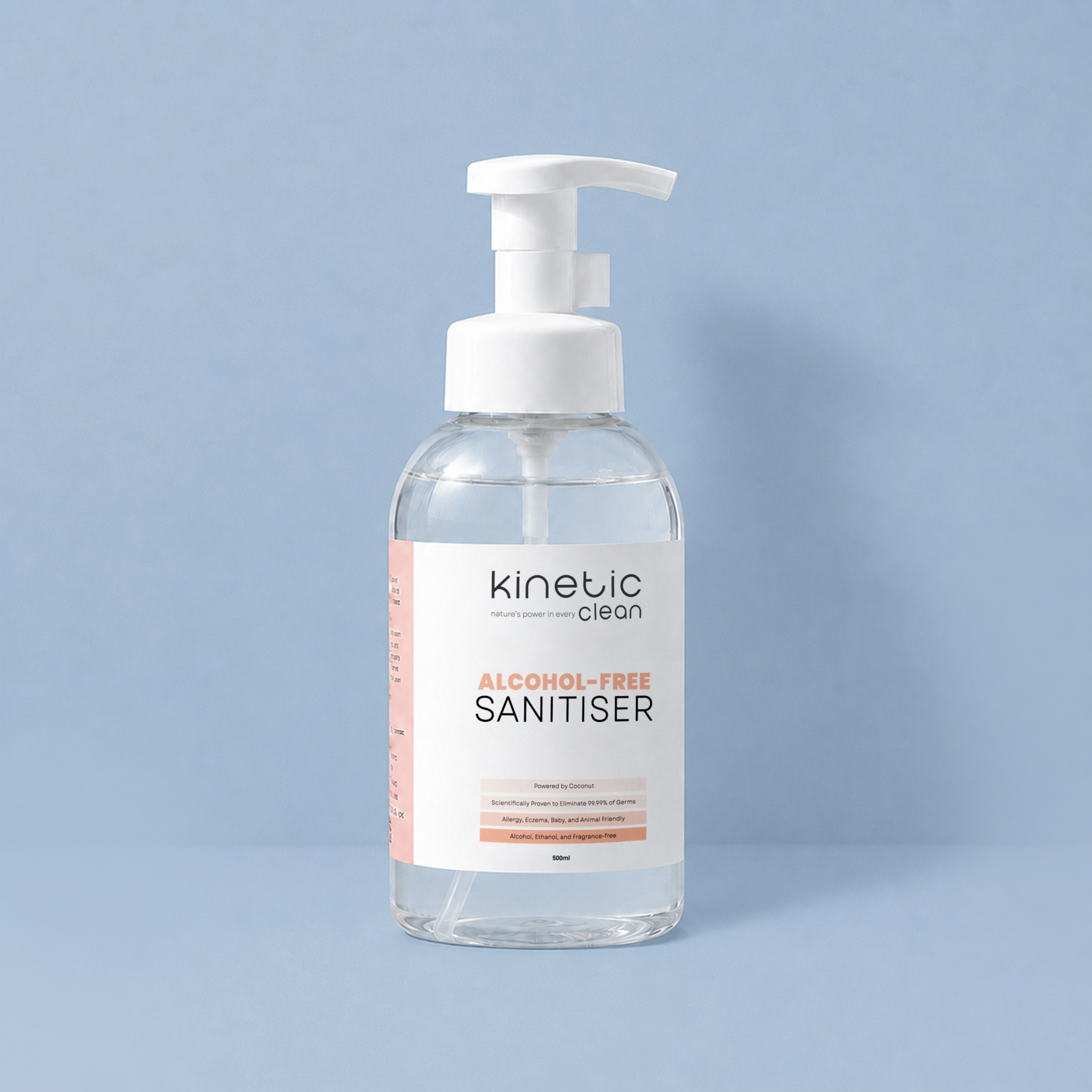
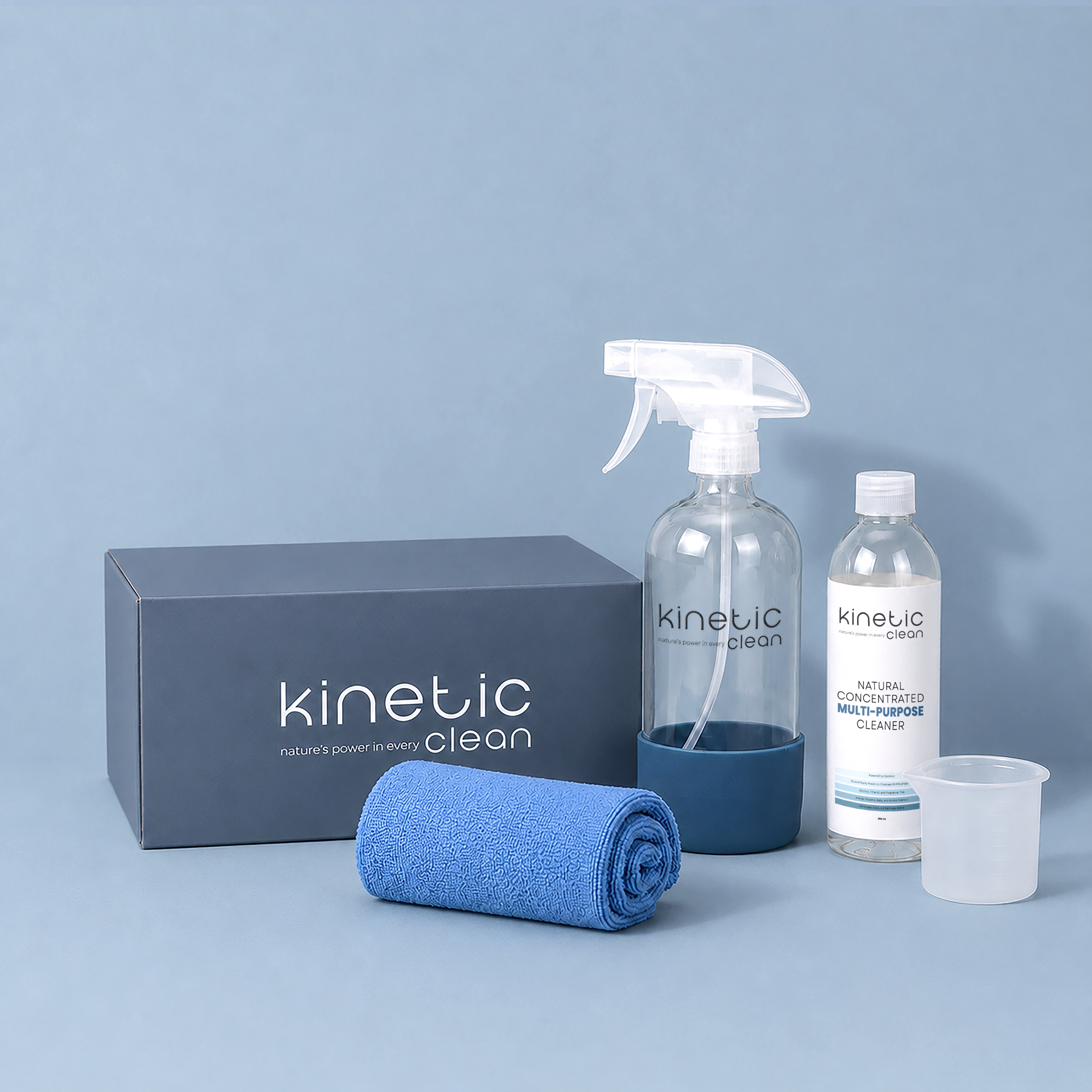
If you want one product that covers the weekly routine above, begin with the 1L Concentrate Formula, or choose the Starter Bundle to have everything you need in one order. Our range is natural and non-toxic, free from synthetic chemicals, artificial fragrances and alcohols, and made for families and health-sensitive people who want a safer way to clean. Our Kinetic Clean Sanitiser and the Bamboo Dish Brush complete a gentle kitchen and bathroom kit.

You can see the full range on our Kinetic Clean homepage.
Yes. The Drinking Water Inspectorate treats hardness as a matter of scale, lather and appliance performance, not a regulated health issue. Hard water can leave skin and shower screens feeling dry or filmy, so rinse well and keep the room ventilated. If you have a skin condition that flares, talk to your GP or pharmacist.
Start with prevention: dry surfaces after use and do a light, regular clean with a gentle product. Fresh marks come off easily with a soft cloth and a diluted all-purpose cleaner. Older crusts on taps or shower heads may need a mild acid such as diluted white vinegar, kept away from natural stone and some metal finishes.
A softener reduces minerals in the water it treats, but it may not reach every tap, and drying water can still leave marks, especially if the softener needs salt or servicing. Check the salt level and the manufacturer’s guidance, and keep drying surfaces after use.
Not necessarily. Hard water reduces lather, but more product does not always mean a cleaner result, and excess can leave residue. Use the labelled dose, rinse thoroughly, and adjust dishwasher salt and laundry additives to your local hardness. Netmums reports that soda crystals can let you halve the detergent dose in some cases.
It is better to use them separately. Mixing them leaves a solution close to plain water, according to Netmums. For limescale, an acid like diluted vinegar works better on its own, and dry bicarbonate is best kept for absorbing odors.