Cart
0
You may also like


Do not mix cleaning products. Combining bleach with ammonia, vinegar, toilet cleaner or other acids can release toxic gases, and fire services across the UK have warned that it can cause serious injury or death. The safest routine is one product per job, used as the label directs, with the surface rinsed before anything else goes on it. At Kinetic Clean we make natural household cleaning products free from synthetic chemicals, artificial fragrances and alcohols, so a family can keep the cupboard simple and the routine short. This guide covers the combinations to avoid, what exposure feels like, what to do if it happens and how to clean without taking the risk.
Most people who mix cleaners are trying to do a better job. They assume two products will clean twice as well. Fire services say the opposite is true. London Fire Brigade explains that cleaning products can produce harmful gases, liquids or fumes when combined, and that these can build up quickly indoors, especially in small rooms such as bathrooms, and cause serious illness or death.
The scale is not small. London Fire Brigade reported that since 2023 it had responded to over 150 incidents involving cleaning chemicals that triggered a dangerous reaction, and that specially trained and equipped officers were needed to identify and deal with the combinations. Group Commander Matt Hayward said people often think products will be twice as effective when mixed, but that it can be a recipe for disaster.
Bedfordshire Fire and Rescue Service issued a similar warning in August 2025. It said residents had unintentionally triggered chemical reactions by mixing substances such as bleach with toilet cleaner or ammonia-based sprays. Its Group Commander, Mark Garrett, pointed out that even supermarket-bought items can release toxic gases when mixed.
The point that surprises many households is that mixing does not even help. Products are formulated to work alone, at the strength and in the way the label describes. Combining them adds risk without adding cleaning power.

London Fire Brigade names bleach and ammonia, bleach and vinegar, bleach and rubbing alcohol, hydrogen peroxide and vinegar, and different types of drain cleaner as combinations that can create toxic fumes and chemicals. The table below sets out the main ones and what official or published sources say about each.
| Combination | What can happen |
|---|---|
| Bleach and ammonia (found in some glass and multi-surface sprays) | Chloramines can form, which are highly irritating to the respiratory tract |
| Bleach and vinegar, lemon juice or other acids | Chlorine gas is released |
| Bleach and toilet, bathroom or oven cleaner | Toxic and corrosive gases, because many of these products are acidic or strongly reactive |
| Bleach and rubbing alcohol | Toxic fumes and chemicals can be created |
| Hydrogen peroxide and vinegar | Peracetic acid forms, which can cause skin burns, eye damage and breathing problems |
| Different drain cleaners | Dangerous reactions and fumes |
| Baking soda and vinegar in a sealed bottle | Pressure builds and the container can burst |
This is the pairing behind most warnings. UKHSA guidance says that household bleach decomposes on contact with acids to produce toxic and corrosive gases, including chlorine. GOV.UK adds that household bleach usually contains around 5% sodium hypochlorite, though some products contain up to 10%, and that mixing it with acidic products produces chlorine gas, which in high concentrations can be fatal because of fluid on the lungs.
Acids are not only the obvious ones. London Fire Brigade lists vinegar, lemon juice, oven cleaners, bathroom and toilet cleaners and glass or window cleaners among the products not to combine with bleach.
Ammonia hides in many glass cleaners and multi-surface sprays, which is why the question “is it safe to mix Windex and bleach?” gets asked so often. The answer is no. GOV.UK states that if sodium hypochlorite is mixed with an ammonia-containing cleaner, chloramines may be produced that are also highly irritating to the respiratory tract. The same government guidance on ammonia notes that inappropriate mixing of bleach and ammonia-based products can expose people to toxic gases, and that high levels of ammonia may cause burns and swelling in the airways, lung damage and can be fatal.
If you want to understand where ammonia turns up, our guide to ammonia cleaning risks explains what households should know.
This pairing is popular in viral cleaning videos. Wales Online reported in August 2025 that an expert warned that mixing hydrogen peroxide and vinegar creates peracetic acid, which can cause skin burns, eye damage and respiratory problems. The same report warned that baking soda and vinegar kept in a closed container can build up enough pressure to make the container explode.
Homemade recipes are where mixing most often happens, because the bathroom is the room where limescale, soap scum and mould tempt people to reach for several products at once. The expert quoted by Wales Online put it plainly: a million views does not mean something is safe, and anyone unsure should check official health and safety guidance and stick to trusted cleaning products used as instructed. If a bathroom job needs a stronger approach, choose one suitable product and follow its directions rather than building a blend. Our guide to removing soap scum naturally takes the single-product approach for the bathroom.
London Fire Brigade lists the symptoms of exposure to toxic chemicals as coughing, chest pain, breathing difficulties, throat irritation, burning eyes and chemical burns, and says longer-term exposure can lead to chronic bronchitis and reduced lung function.
GOV.UK describes a spectrum. Minor exposures from mixing products may cause burning eyes and throat, coughing and a sore throat. More substantial exposure may cause breathing difficulties and swelling of the airways. In most cases symptoms from chlorine gas disappear within 1 to 4 weeks without long-term effects, although a small proportion of people may develop long-term sensitivity to inhaled chemicals, known as reactive airways dysfunction syndrome (RADS). Government chlorine guidance also states that exposure to high concentrations of chlorine gas can damage the lungs and airways, causing fluid to build up in the lungs, which can be fatal.
Children, pets, and people with asthma or other breathing conditions are the people to think of first when you decide how and where to clean. If someone in your home has a breathing condition, ask your GP or pharmacist about which products suit them.

Act first and investigate later. London Fire Brigade’s advice is to:
For skin and eyes, the detail matters:
The agencies give slightly different rinse times because they cover different chemicals and situations. If you are unsure, follow what the emergency call handler tells you.
The fire services’ guidance is consistent, and it fits a simple routine.
A regular schedule also helps, because the urge to mix usually comes when a room has been left too long and looks like it needs a heroic effort. A steady rhythm, such as a weekly house cleaning routine, keeps each job small enough for one product.
Most accidents start with a crowded cupboard: a bleach, a toilet gel, a limescale remover, a glass spray and a drain unblocker, each for one narrow task. Every extra bottle is another chance for a reaction. Many households also do not know what is inside each one, and ingredient lists can be hard to read. Our guide to cleaning product ingredients and how to read labels walks through what the common ingredients do.
It also helps to know what a job actually needs. Cleaning removes dirt and residue, while disinfecting is a separate step. Our explainer on disinfectant versus cleaner shows when each is appropriate, so you do not reach for a second product out of habit.
Families with babies, pregnant women and people sensitive to strong fumes often want to reduce the number of harsh products in the house. If that is you, see our notes on cleaning products during pregnancy and our overview of non-toxic cleaning products.
We started Kinetic Clean from a simple idea: if we would not put harsh chemicals on our skin, we should not use them to clean the spaces where we live. Many conventional cleaning products rely on synthetic chemicals, artificial fragrances and alcohols that can irritate skin, lungs and overall well-being.
That is why we think about mixing the way a careful household should. The fewer harsh products in a cupboard, the fewer chances for a dangerous mistake. Our Multi-Purpose Concentrate and our Sanitiser are made without synthetic chemicals, artificial fragrances and alcohols, and they are designed for families and health-sensitive people who want safer alternatives.
Our advice is the same as the fire services’: read every label, keep products in their original bottles, ventilate, and use one product at a time. A simple, well-understood routine is the one people keep to.
TekHive
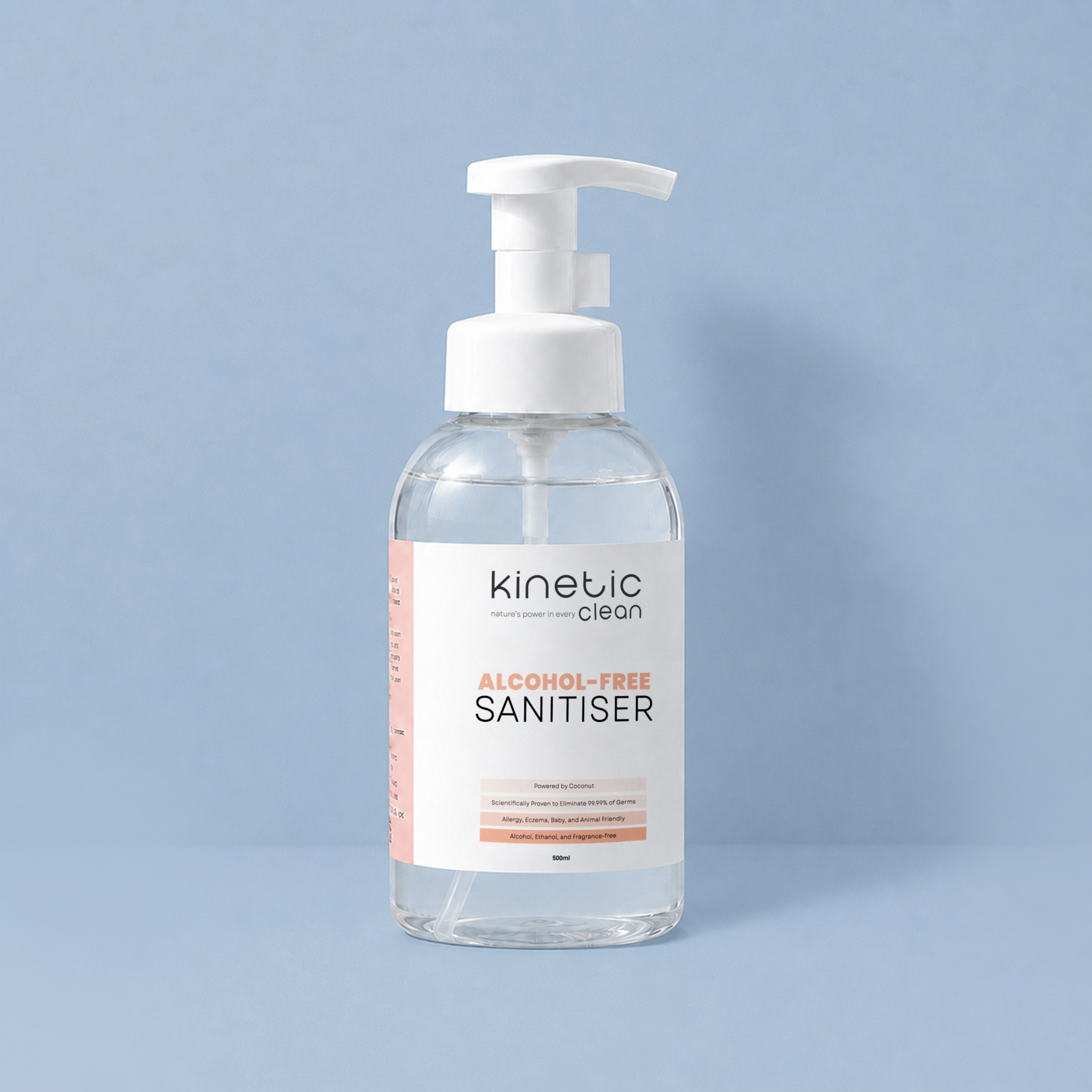
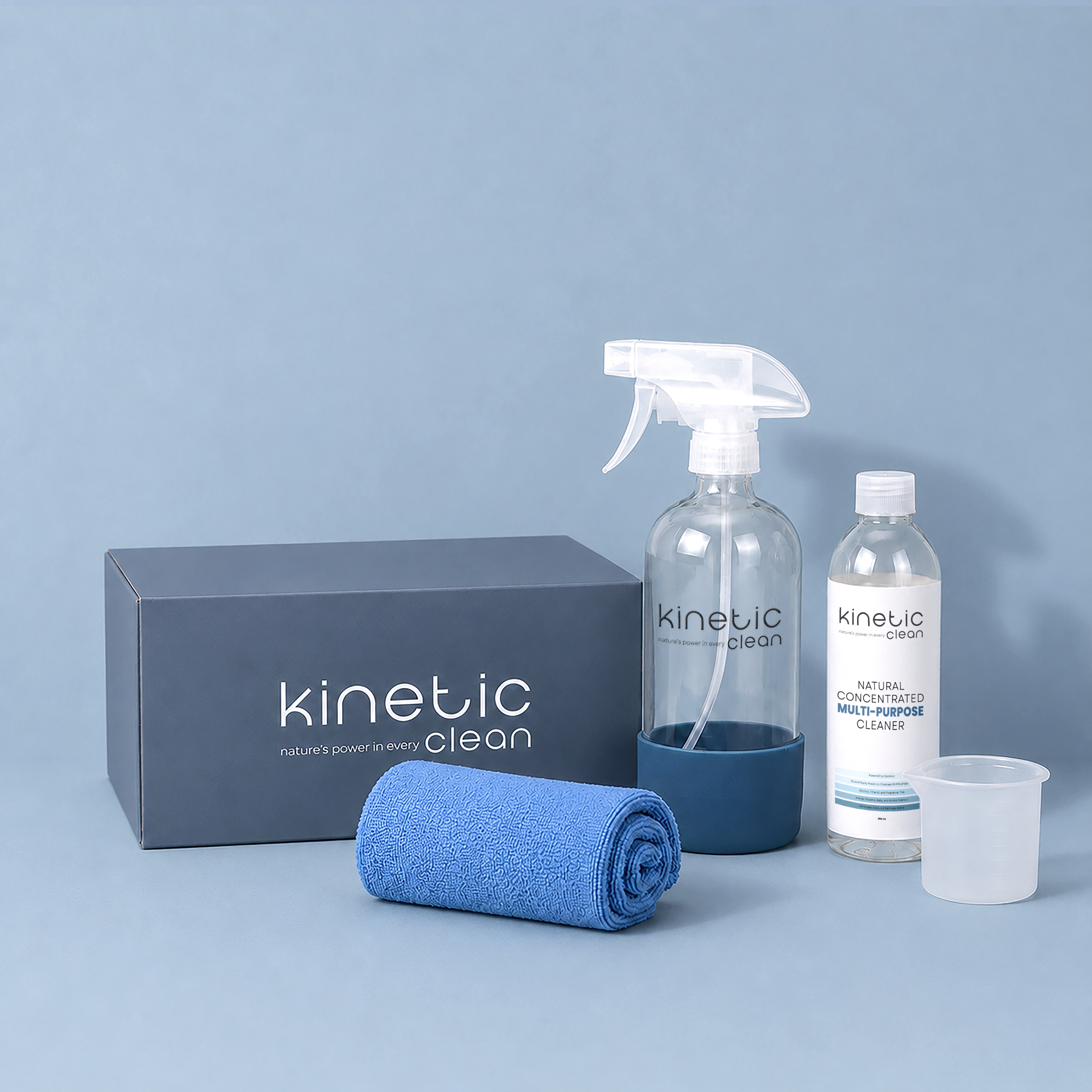
If you are rebuilding your cleaning cupboard around fewer, gentler products, our Multi-Purpose Concentrate is a natural, non-toxic option made without synthetic chemicals, artificial fragrances and alcohols. It is available as a 250ml Concentrate Formula and a 1L size. For surfaces that call for sanitising, there is our Sanitiser 500ml. Our Bamboo Dish Brush starts from £2.99.

Whichever you choose, follow the label on each bottle, as you would with any cleaning product.
Bleach should never be combined with ammonia, vinegar, lemon juice, toilet or bathroom cleaners, oven cleaners, glass cleaners or rubbing alcohol. London Fire Brigade also lists hydrogen peroxide with vinegar and different types of drain cleaner. The safest rule is not to mix any cleaning products at all.
No. Many glass cleaners contain ammonia, and GOV.UK says that mixing bleach with an ammonia-containing cleaner can produce chloramines, which are highly irritating to the respiratory tract. If you have done it, leave the room, get fresh air and call 999 if you feel unwell.
Only if you take care. The fire services advise washing the first product off completely, rinsing the surface and leaving time before applying a second. Never use a different cleaner straight after the first, and keep the room ventilated throughout.
Coughing, a sore or irritated throat, burning eyes and chest pain are the commonly listed signs, and breathing difficulties can follow. Get out into fresh air straight away and seek medical advice even if symptoms seem mild. Call 999 if breathing is difficult.
Homemade blends are where many mixing incidents begin. Combinations such as hydrogen peroxide and vinegar create peracetic acid, and baking soda and vinegar in a closed bottle can burst it. Using one trusted product as directed is the safer path.