Cart
0
You may also like


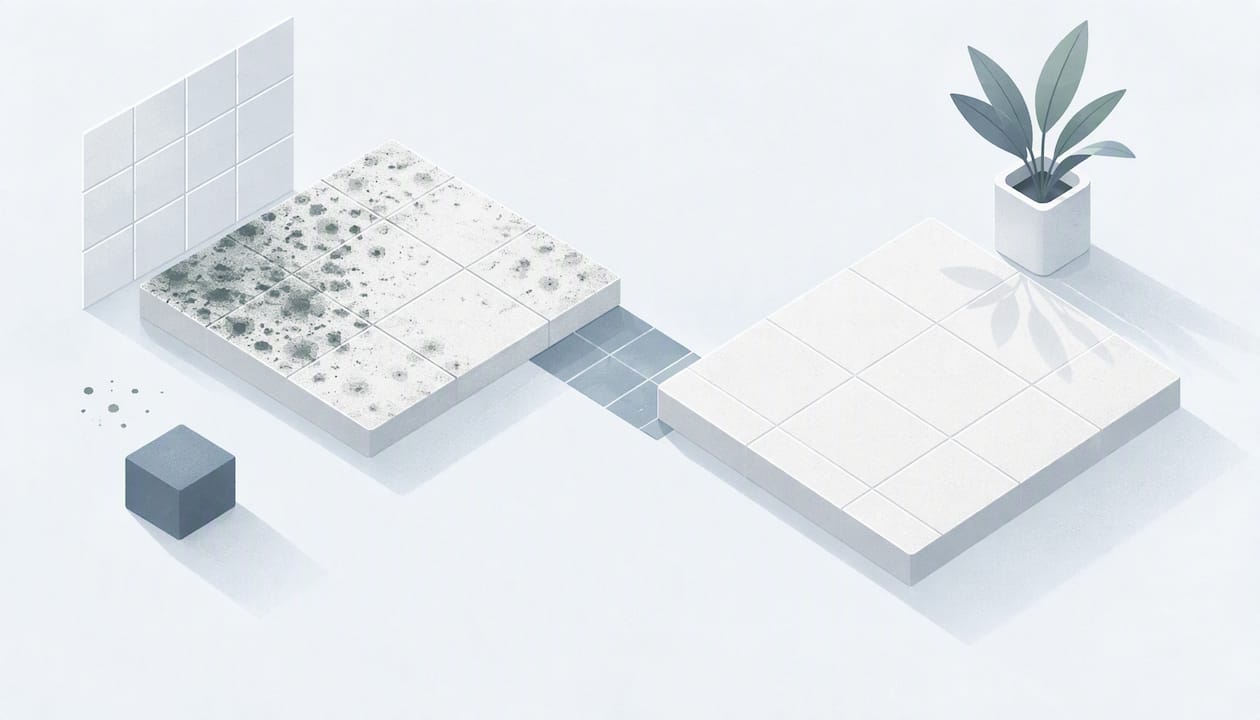
For a small patch of mildew, you can clean it without bleach. Wipe it off with detergent and hot water, or with white vinegar, wear a mask and gloves, keep the room ventilated, and then deal with the damp that caused it. UK public health guidance now points away from bleach for mould, and the most important step is to physically remove the growth rather than just change its colour.
This guide explains which gentle methods suit which surfaces, how to clean safely around children and sensitive people, when a patch is too big to tackle yourself, and how to stop mildew returning.
Mildew is a surface growth of mould, usually grey, white or black, that appears wherever moisture lingers: bathroom ceilings, window frames, shower sealant, the backs of wardrobes. Bleach feels like the obvious fix because it removes colour fast. The trouble is that it is harsh on the person doing the cleaning and does not solve the underlying problem.
UK government guidance on damp and mould in the home says that mould products should be used in preference to bleach for health and safety reasons. An NHS children’s health resource makes the same point in plain terms: for a small amount of mould, white vinegar or a mould-remover spray can be used, and bleach is not recommended.
There is a second reason, and it matters more than the first. Bleaching a stain makes a wall look clean, but it does not necessarily remove what caused the stain. Researchers who review mould remediation stress that the core objective is physical removal of the mould and mould-contaminated materials, because dead mould remains allergenic and potentially toxic. A product that only bleaches or only kills does not finish the job. Cleaning does.
You do not need a special arsenal. Official and public-health advice keeps returning to a short list.
For hard surfaces, ordinary detergent in hot water is the baseline. GOV.UK’s guidance on cleaning after flooding advises that hard surfaces that may have been in contact with floodwater should be cleaned with hot water and detergent. That advice is written for flood-damaged homes, which are about as demanding as it gets for mould, so it is a reasonable standard for a bathroom tile or a window sill too.
The point of the detergent is to lift the growth off the surface so that it can be wiped away. Use a clean cloth, rinse it often in a separate bowl of clean water, and never dunk a dirty cloth back into your cleaning solution.

White vinegar is the household option named in the NHS-linked advice above, for small amounts of mould. It is a mild acid, and many people already have a bottle in the cupboard. Apply it to the area, leave it briefly, then wipe and rinse. Vinegar has a strong smell that fades as it dries, so ventilate well. Test it on a hidden spot first on natural stone, grout that is crumbling or painted surfaces, since acids can dull some finishes.

If you buy a fungicidal wash, check the label. Plymouth City Council advises that a fungicidal wash used to kill mould should carry a Health and Safety Executive approval number. That number tells you the product has been assessed for the claim it makes.
The UK official sources we reviewed name detergent and white vinegar, not baking soda. Baking soda is a mild abrasive that can help scrub grime from grout and shower trays, but treat it as an aid for scrubbing rather than a proven mould treatment. The principle stays the same whichever you pick: lift the growth off, wipe it away, dry the surface.
This works for a patch of mildew on tiles, sealant, a window frame or a painted bathroom wall. Work through it in order.
Cleaning stirs up spores, so the safest approach is to do it when sensitive people are not in the room. Move children and pets out while you work, and keep them out until the surface is dry and the air has cleared. Older UK council guidance on damp and mould also stresses that ventilation, a mask and goggles are the basics during removal.
It is worth taking this seriously in family homes. Healthcare professionals at Connecting Care for Children note that infants and children are especially vulnerable to the respiratory effects of mould, which makes prompt removal and moisture control essential. If anyone in the household has asthma, allergies or a chest condition, and symptoms get worse near the affected room, speak to your GP or pharmacist.
This is also where the choice of cleaner matters. Harsh fumes in a small, closed bathroom are an extra irritant on top of the spores. Gentle, low-fume cleaning with plenty of fresh air is kinder on lungs and skin, and it is the approach the official guidance supports.
Not everything can be rescued by wiping. The right response depends on whether the material is hard and sealed or soft and absorbent.
| Surface | What to do | Why |
|---|---|---|
| Tiles, glazed ceramics, baths, sealed worktops | Detergent in hot water, or white vinegar, then rinse and dry | Hard, non-porous surfaces release growth easily |
| Painted walls and ceilings | Damp wipe with detergent solution; avoid soaking | Paint can be damaged by too much water |
| Silicone sealant | Clean and dry; replace if stained deeply | Mildew can root into old sealant |
| Clothing, bedding, soft toys | Wash at 60°C with detergent | Textiles should be washed on a 60°C cycle with detergent, where the fabric label allows it |
| Carpets, soft furnishings, ceiling tiles | May need replacing | Official guidance says absorbent materials may need to be discarded if mouldy, as complete removal is often difficult or impossible |
For delicate items such as leather boots or bags, check the maker’s care instructions first, and use a damp cloth with a very mild solution rather than soaking. Dry them away from direct heat.
This is the question behind “can acid kill mould?” and “does bleach kill spores?”. The honest answer is that killing is not the goal. A professional review of mould remediation notes that dead mould remains allergenic, and some dead moulds are potentially toxic, so physical removal is essential. The same body of guidance raises concerns about biocide toxicity and questionable effectiveness.
A New Zealand scientific review goes further, finding that no remediation treatment completely destroyed viable fungi or removed mycotoxins. The practical lesson is simple. Do not hunt for a stronger chemical. Clean thoroughly, remove what can be removed, dry the area and fix the moisture.
Small patches are manageable at home. GOV.UK guidance says that larger areas of mould should only be addressed by qualified professionals, while tenants and landlords can reasonably be expected to manage small amounts of mould and condensation.
Call in help if:
Leaks are a classic example. A roof or pipe leak can feed mould quickly, and this explanation of mould from a roof leak and how fast it grows shows why fixing the water source has to come before any cleaning.
If you rent, tell your landlord or housing provider in writing. Cleaning the surface does not remove their responsibility to deal with the cause.
Mildew returns when moisture does. The same GOV.UK guidance says that simply removing surface mould will not prevent it from reappearing, and that underlying causes such as building deficiencies, inadequate ventilation and condensation need attention.
Things you can do yourself:
NICE-linked health guidance adds that people who visit homes professionally should identify poor air quality and give practical ventilation advice, which is a reminder that ventilation is a health measure, not just a comfort one.
A light, regular clean prevents the film of soap scum and dust that mildew likes to settle on. A simple weekly rhythm is enough for most homes:
This routine does not replace dealing with a damp problem, but it makes early signs easy to spot while they are still a small wipe-away job.
We started Kinetic Clean from a simple belief: if we would not put harsh chemicals on our skin, we should not use them to clean the spaces where our families live. Mildew shows how that belief plays out in real homes. People reach for the strongest bottle because the problem looks serious, then spend the next hour in a small bathroom breathing fumes.
What the UK guidance describes is closer to how we think about cleaning in general. Lift the growth off, wipe it away, dry the surface, and fix the moisture behind it. None of that needs synthetic fragrance or alcohol, and all of it is easier on lungs and skin, particularly for children and anyone sensitive.
That is why our products are made without harsh synthetic chemicals, artificial fragrances or alcohols. We design them for the regular cleaning that keeps bathrooms, kitchens and windowsills tidy, so grime and soap film do not give moisture a place to settle. We do not claim any cleaner replaces ventilation or a proper repair. We do believe that gentle products, used consistently, make a healthier home easier to keep.
TekHive
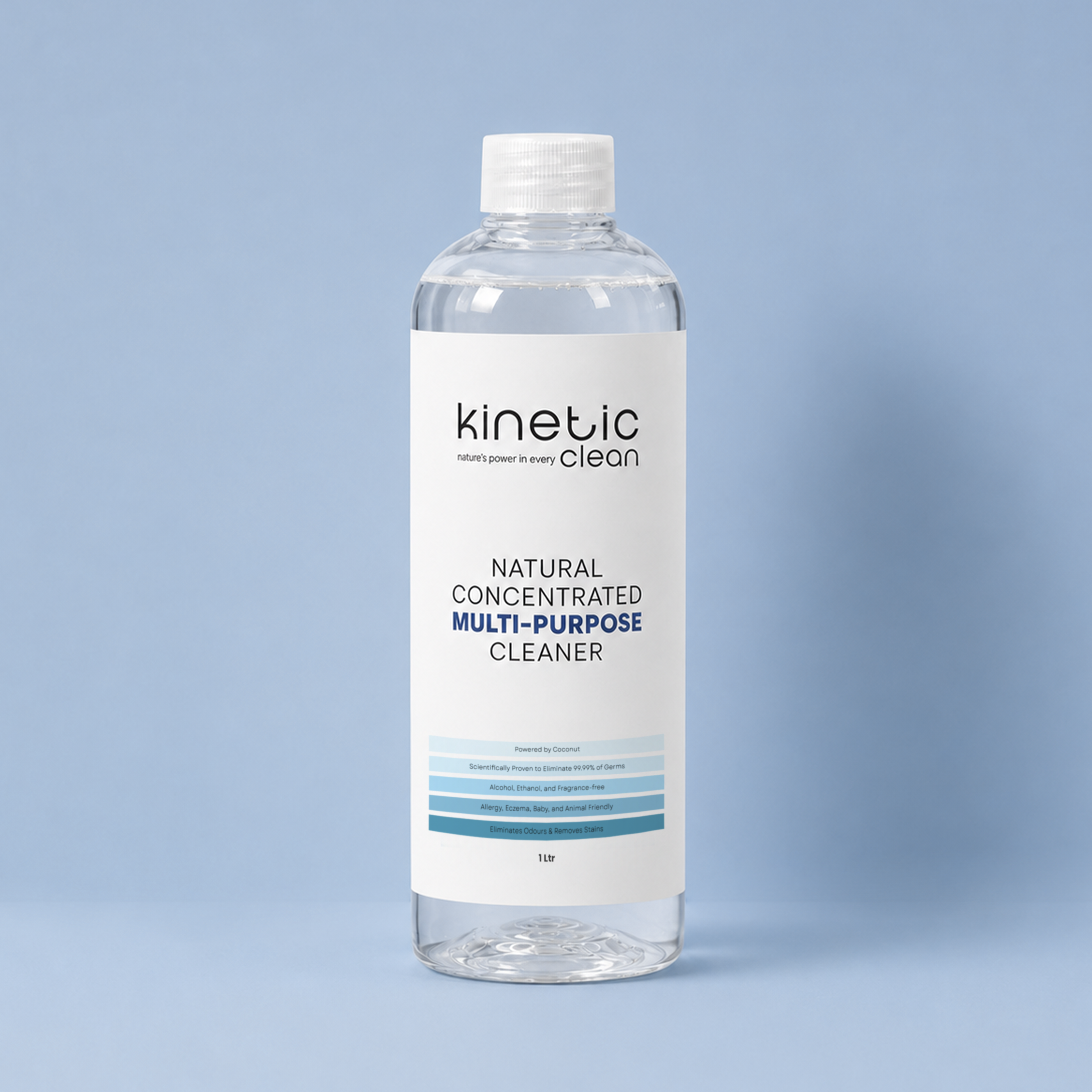
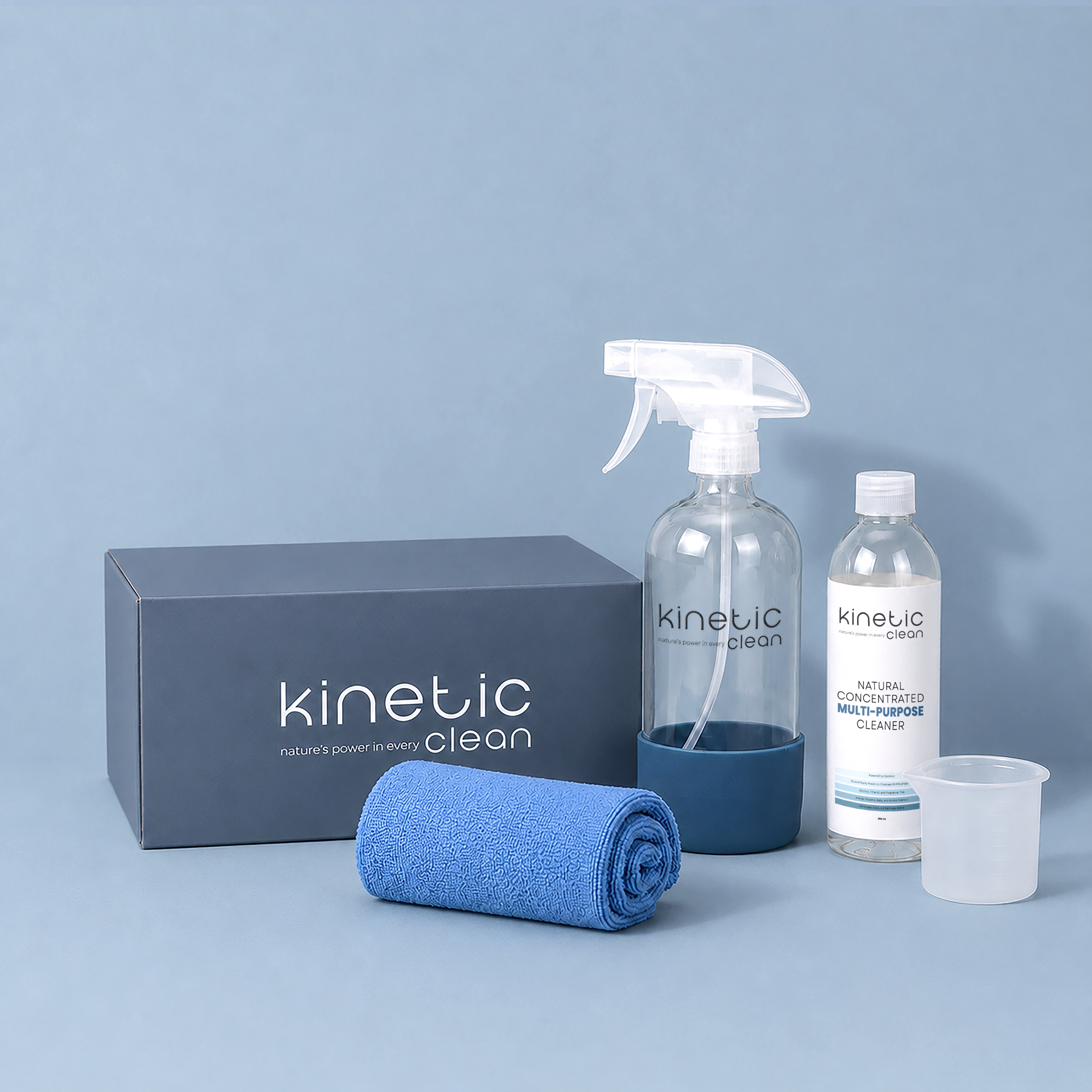
If you want a cleaner for everyday bathroom and kitchen upkeep that is free from synthetic chemicals, artificial fragrances and alcohols, our 1L Concentrate Formula is made for that job. It is a concentrate, so one bottle goes a long way, and you can pour it into a reusable glass spray bottle for weekly wipe-downs.

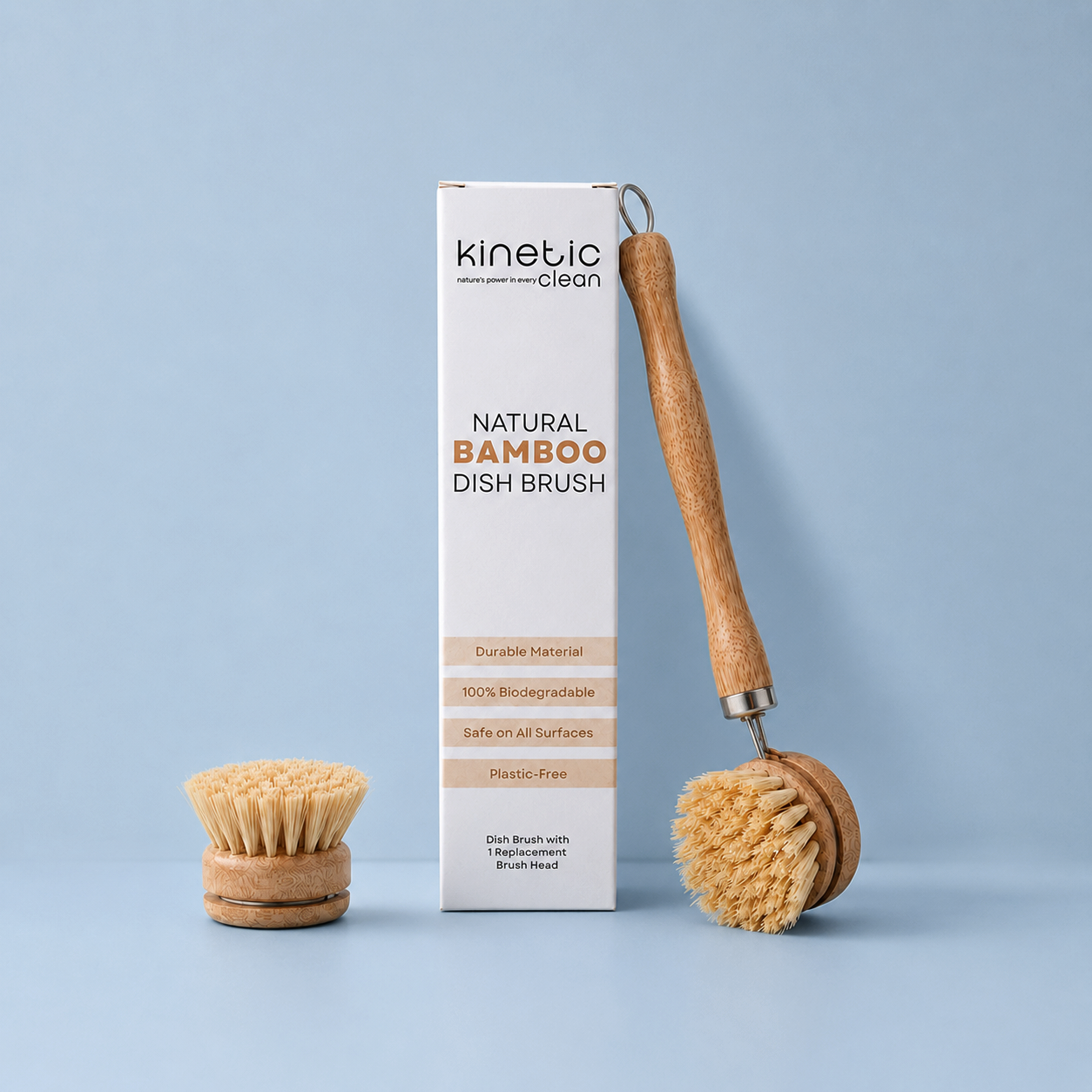
New to switching? The Starter Bundle puts what you need in one order, and our Bamboo Dish Brush starts from £2.99. You can read more about our approach in our guide to non-toxic cleaning products, or see how fragrance-free cleaning suits sensitive households.
Yes, for small patches. NHS-linked advice for families names white vinegar for a small amount of mould and says bleach is not recommended. Wipe, rinse and dry the surface afterwards, and test on a hidden spot on delicate finishes first.
Not reliably. Scientific reviews found that no remediation treatment completely destroyed viable fungi, and dead mould can still cause allergic reactions. That is why physically cleaning the growth away, then drying the area, matters more than the choice of liquid.
For a small patch, ventilate the room, wear a mask, gloves and goggles, dampen the area and wipe it with detergent in hot water or white vinegar. Dry it thoroughly. If the patch is large, or returns soon after cleaning, ask a qualified professional to find the cause.
Wash textiles at 60°C with detergent, if the care label allows. GOV.UK advises this cycle for items such as clothing, bedding and toys in its flooding guidance. Items that cannot take that temperature should be treated according to their care label.
It is safest when children and pets are out of the room, the window is open and the door is closed. Wear a mask, gloves and goggles. Keep children away until the area is dry. If a child has asthma or breathing problems, speak to your GP.